Health · Book club
Anatomy of the Spirit book club questions
Here are 11 book club questions for Anatomy of the Spirit by Caroline Myss, ordered to open easily and end somewhere worth arguing about. Copy them, print them, or bring them up one at a time.
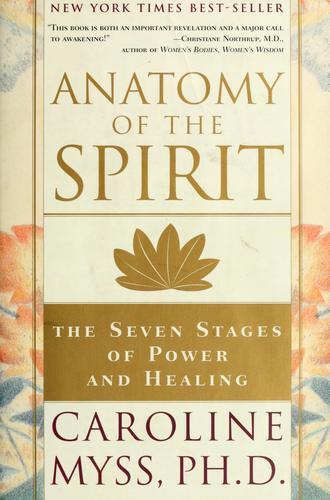
Anatomy of the Spirit is Caroline Myss's attempt to synthesize three major spiritual traditions — the Hindu chakra system, the Christian sacraments, and the Kabbalistic Tree of Life — into a unified model of human energy anatomy.
Caroline Myss · 1996 · 5h 20m
Full summary and key takeaways →The 11 questions
- 1.
Myss argues that biography becomes biology. Think of an illness or physical complaint you or someone close to you has had. Does a connection to an emotional pattern feel plausible or forced?
- 2.
The concept of woundology is pointed: Myss says some people use illness or trauma as social currency rather than working toward healing. Where do you see this dynamic in yourself or others?
- 3.
How do you respond to the claim that three major spiritual traditions describe the same underlying energy anatomy? Does the convergence feel significant, or like pattern-matching across very different systems?
- 4.
Myss maps specific emotional conflicts to specific body regions. Which of the seven energy centers feels most relevant to your own recurring challenges?
- 5.
The book argues that chronic resentment is energetically costly and physically damaging. How does that claim land for you — as insight, as pressure, or as both?
- 6.
What would it mean to make a health decision based on spiritual rather than clinical reasoning? Have you ever done that, and how did it turn out?
- 7.
Myss is clear that her framework is not conventionally testable. Does that limit how much you can take from it, or do you find it useful precisely because it asks different questions?
- 8.
Where in your life are you currently investing energy in a way that feels draining rather than generative? What would shifting that look like?
- 9.
The fourth chakra governs both love and grief. Myss treats the capacity to grieve fully as essential to heart health. Do you give grief enough room in your own life?
- 10.
Myss argues that spiritual maturity requires releasing the need for external validation. Where are you still seeking that validation, and what would it cost you to stop?
- 11.
If you used Myss's framework as a diagnostic tool — looking at where in your body you hold tension or illness — what story would it tell about the decade you're currently living?
How to run the discussion
- Pick six to eight, not all of them. An hour of real discussion covers fewer questions than anyone expects, and racing the list is what makes a book club feel like homework.
- Open with what people noticed, not what they concluded. Asking for a verdict first hardens opinions before anyone has heard each other.
- Let the disagreement run. The questions below that split a room are the ones worth the time; the ones everyone answers the same way can be skipped.
- Ask the quiet person a specific question. A direct, narrow question is far easier to answer than an open invitation to contribute.
Themes worth steering toward
If the conversation stalls, these are the threads that usually restart it.
Common questions
What are good book club questions for Anatomy of the Spirit?
Here are 11 book club questions for Anatomy of the Spirit by Caroline Myss, ordered to open easily and end somewhere worth arguing about. The strongest openers ask what each reader noticed rather than what they concluded, and the discussion usually turns on energy medicine, spirituality, mind-body connection.
How long should a book club discussion of Anatomy of the Spirit last?
Most groups run 60 to 90 minutes of actual discussion. That is roughly six to eight questions, not all of them, so pick the ones that suit your group rather than working down the list in order.
What are the main themes in Anatomy of the Spirit?
Energy medicine, Spirituality, Mind-body connection, Healing, Personal power. Those are the threads most likely to divide a room, which makes them the useful places to steer a discussion that has gone quiet.
Picking the next one? See books like Anatomy of the Spirit or questions for other book club picks.
