Mystery · Book club
And Then There Were None book club questions
Here are 12 book club questions for And Then There Were None by Agatha Christie, ordered to open easily and end somewhere worth arguing about. Copy them, print them, or bring them up one at a time.
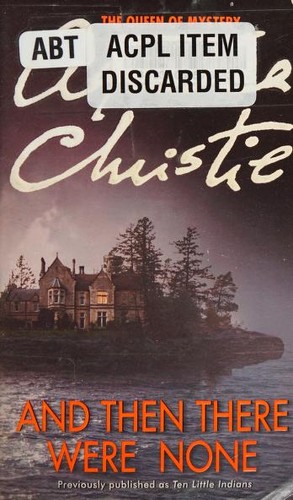
Ten strangers are invited to an island off the Devon coast under various pretexts.
Agatha Christie · 1939 · 4h 0m
Full summary and key takeaways →The 12 questions
- 1.
The judge believes he is delivering justice that the legal system failed to deliver. Is there any version of his argument that holds? Does Christie think so?
- 2.
All ten characters escaped punishment for real killings. Does that change how you feel about watching them die, and does the novel want it to?
- 3.
Christie removes the detective figure. What does that structural choice do to the reader's experience of fear and uncertainty?
- 4.
The nursery rhyme as murder template is one of crime fiction's most famous conceits. Why does it work? What specifically does the children's context add to adult horror?
- 5.
Each character's self-justification for their past crime is distinct. Which one did you find most understandable? Most contemptible?
- 6.
The book was published in 1939 with a title that is now considered offensive and has been changed in reprints. Does the change matter? What does the original title do that replacements don't?
- 7.
Vera Claythorne's arc is arguably the most psychologically developed of the ten. Does Christie give her interior life enough space, or is she serving a plot function?
- 8.
The island eliminates the possibility of outside help or escape. Is this a narrative convenience or does Christie make thematic use of the isolation itself?
- 9.
The solution is revealed only in a posthumous document found in a bottle. Is that a cheat, or does it fit the novel's logic that no one on the island could have known?
- 10.
On a second reading, knowing the solution, does the novel read differently? What does that tell you about how Christie constructed it?
- 11.
The book is the best-selling mystery novel ever written. What specifically accounts for that longevity — puzzle craft, moral seriousness, suspense, or something else?
- 12.
Compared to a Poirot or Marple novel, what do you gain and lose by removing a detective from the equation?
How to run the discussion
- Pick six to eight, not all of them. An hour of real discussion covers fewer questions than anyone expects, and racing the list is what makes a book club feel like homework.
- Open with what people noticed, not what they concluded. Asking for a verdict first hardens opinions before anyone has heard each other.
- Let the disagreement run. The questions below that split a room are the ones worth the time; the ones everyone answers the same way can be skipped.
- Ask the quiet person a specific question. A direct, narrow question is far easier to answer than an open invitation to contribute.
Themes worth steering toward
If the conversation stalls, these are the threads that usually restart it.
Common questions
What are good book club questions for And Then There Were None?
Here are 12 book club questions for And Then There Were None by Agatha Christie, ordered to open easily and end somewhere worth arguing about. The strongest openers ask what each reader noticed rather than what they concluded, and the discussion usually turns on guilt and justice, isolation, collective punishment.
How long should a book club discussion of And Then There Were None last?
Most groups run 60 to 90 minutes of actual discussion. That is roughly six to eight questions, not all of them, so pick the ones that suit your group rather than working down the list in order.
What are the main themes in And Then There Were None?
Guilt and justice, Isolation, Collective punishment, Memory and self-deception, Morality outside the law. Those are the threads most likely to divide a room, which makes them the useful places to steer a discussion that has gone quiet.
Picking the next one? See books like And Then There Were None or questions for other book club picks.
