Talk to Angela's Ashes like its author wrote you back.
Get the ideas that fit your life — not generic summaries.
- Chat with the book
- Audiobook-style main ideas
- Adapts to your life and goals
- Helps you take action
What it argues
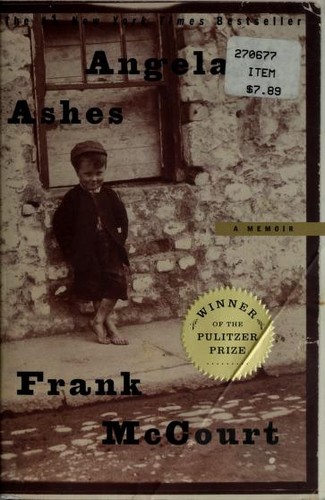
Angela's Ashes is Frank McCourt's memoir of a catastrophically impoverished Irish Catholic childhood, first in Brooklyn and then in Limerick, during the 1930s and 1940s. Published when McCourt was sixty-six years old, it won the Pulitzer Prize and became one of the best-selling memoirs of the twentieth century. Its success depended on the apparent paradox at its center: the material is unrelievedly grim — infant deaths, hunger, drunken paternal abandonment, disease — yet the book is often funny, and the narrator's voice maintains a vitality that the circumstances do not explain.
The McCourt family returns to Ireland from Brooklyn after the death of the twins, Frank's infant brothers, and the family's arrival in Limerick marks the beginning of what the adult narrator will describe as a wretched childhood. Limerick in the 1930s was a city of grinding unemployment, sectarian rigidity, and class contempt directed at the rural poor. Frank's father Malachy is charismatic, well-read, and chronically unemployable due to alcoholism. He regularly drinks away his dole money, leaving Angela and the children to survive on charity, tea, and bread.
What it gets right
- 1.
Humor is a survival mechanism, not a denial of suffering. McCourt's comedy operates alongside — not instead of — the gravity of what his family endured.
- 2.
Poverty in the memoir is specific and material: it is wet shoes, shared beds, inadequate nutrition, and the particular degradation of charity. Its texture is what makes it real.
- 3.
The memoir form enables a double perspective — the child who experienced and the adult who narrates — and McCourt exploits that gap with precision.
What it covers
Who wrote it
Frank McCourt (1930–2009) was born in Brooklyn to Irish immigrant parents and raised in Limerick, Ireland, after the family returned to Ireland during the Depression. He emigrated back to the United States at age nineteen and eventually became a high school English teacher in New York City, a career he held for thirty years. He did not begin writing seriously until retirement. Angela's Ashes, published in 1996 when he was sixty-six, won the Pulitzer Prize for Biography or Autobiography, the National Book Critics Circle Award, and the LA Times Book Prize. He published two sequel memoirs, 'Tis and Teacher Man.
