Talk to Angela's Ashes like its author wrote you back.
Get the ideas that fit your life — not generic summaries.
- Chat with the book
- Audiobook-style main ideas
- Adapts to your life and goals
- Helps you take action
Angela's Ashes, in detail
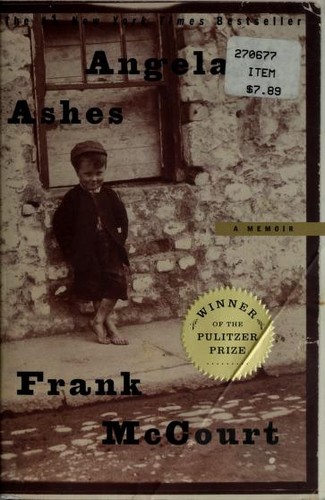
Angela's Ashes is Frank McCourt's memoir of a catastrophically impoverished Irish Catholic childhood, first in Brooklyn and then in Limerick, during the 1930s and 1940s. Published when McCourt was sixty-six years old, it won the Pulitzer Prize and became one of the best-selling memoirs of the twentieth century. Its success depended on the apparent paradox at its center: the material is unrelievedly grim — infant deaths, hunger, drunken paternal abandonment, disease — yet the book is often funny, and the narrator's voice maintains a vitality that the circumstances do not explain.
The McCourt family returns to Ireland from Brooklyn after the death of the twins, Frank's infant brothers, and the family's arrival in Limerick marks the beginning of what the adult narrator will describe as a wretched childhood. Limerick in the 1930s was a city of grinding unemployment, sectarian rigidity, and class contempt directed at the rural poor. Frank's father Malachy is charismatic, well-read, and chronically unemployable due to alcoholism. He regularly drinks away his dole money, leaving Angela and the children to survive on charity, tea, and bread.
The Church appears throughout as an institution that simultaneously oppresses and sustains. The priests and schoolmasters who enforce doctrine also provide the only education available; the Confraternity and the religious festivals mark the calendar of an otherwise featureless poverty. McCourt renders this contradiction without resolving it — religion is neither refuge nor simple villain, but something his family inhabits without being able to evaluate.
Frank's voice as narrator is the book's central achievement. He tells the story largely from the perspective of himself as a child — limited in understanding, not yet equipped to name what is happening to him — while allowing the adult's retrospective intelligence to color the selection of detail. The result is a kind of double-consciousness: the child suffers, the adult shapes the suffering into art, and the gap between the two is where the book's humor and its pathos both live.
The big ideas
- 1.
Humor is a survival mechanism, not a denial of suffering. McCourt's comedy operates alongside — not instead of — the gravity of what his family endured.
- 2.
Poverty in the memoir is specific and material: it is wet shoes, shared beds, inadequate nutrition, and the particular degradation of charity. Its texture is what makes it real.
- 3.
The memoir form enables a double perspective — the child who experienced and the adult who narrates — and McCourt exploits that gap with precision.
