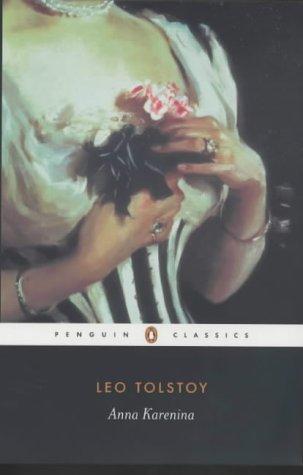
Talk to Anna Karenina like its author wrote you back.
Get the ideas that fit your life — not generic summaries.
- Chat with the book
- Audiobook-style main ideas
- Adapts to your life and goals
- Helps you take action
What it argues
Anna Karenina opens with a famous line — all happy families are alike; each unhappy family is unhappy in its own way — and then proceeds to test that claim across two interlocking stories. Anna Karenina, a beautiful and intelligent married woman in St. Petersburg society, falls passionately in love with the cavalry officer Count Vronsky. Their affair destroys her social standing, her son's access, and eventually her grip on reality. In parallel, Konstantin Levin, a landowner who works his fields alongside peasants, stumbles toward a marriage with the young Kitty Shcherbatsky and a spiritual life that keeps eluding him. The novel never lets you forget these two plots are a deliberate contrast.
The Anna plot is the one readers come for, and it is punishing. Tolstoy follows the inner logic of Anna's destruction with terrifying precision — not moralizing, but tracing exactly how a society's condemnation, combined with jealousy and opium, corrodes someone from the inside. What makes the novel more than a cautionary tale is that Tolstoy clearly admires Anna and is clear-eyed about the society destroying her: Vronsky is not a villain, her husband Karenin is not a cartoon, and the other women who ostracize her are doing what their world requires of them.
What it gets right
- 1.
Anna's destruction is not just the result of passion but of the way her society enforces different rules for men and women who break the same codes.
- 2.
Tolstoy uses Levin — autobiographically — as the counter-pole to Anna: the answer to 'how do you live' is labor, family, and hard-won faith rather than romantic surrender.
- 3.
The novel is unflinching about jealousy as a form of madness. Anna's jealousy in the final section is not irrational — it is the logical end of a self that has been reduced to one relationship.
What it covers
Who wrote it
Leo Tolstoy (1828–1910) was a Russian novelist, moral philosopher, and social reformer, widely regarded as one of the greatest writers in any language. Born into Russian nobility, he served in the Crimean War before turning to literature. His two most celebrated novels, War and Peace (1869) and Anna Karenina (1877), established him as a master of psychological realism and panoramic narrative. In later life he underwent a profound religious conversion, rejected his own earlier work, and became a prominent advocate for Christian anarchism and nonviolence — ideas that influenced Gandhi and shaped Tolstoy's legacy in the twentieth century.
