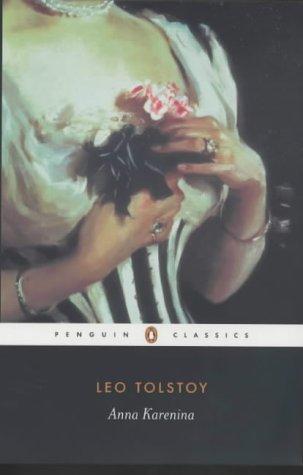
Anna Karenina by Leo Tolstoy is a 1877 literary fiction book about desire and consequence, marriage and hypocrisy, social judgment. Anna's destruction is not just the result of passion but of the way her society enforces different rules for men and women who break the same codes.
Summary
Anna Karenina opens with a famous line — all happy families are alike; each unhappy family is unhappy in its own way — and then proceeds to test that claim across two interlocking stories. Anna Karenina, a beautiful and intelligent married woman in St. Petersburg society, falls passionately in love with the cavalry officer Count Vronsky. Their affair destroys her social standing, her son's access, and eventually her grip on reality. In parallel, Konstantin Levin, a landowner who works his fields alongside peasants, stumbles toward a marriage with the young Kitty Shcherbatsky and a spiritual life that keeps eluding him. The novel never lets you forget these two plots are a deliberate contrast.
The Anna plot is the one readers come for, and it is punishing. Tolstoy follows the inner logic of Anna's destruction with terrifying precision — not moralizing, but tracing exactly how a society's condemnation, combined with jealousy and opium, corrodes someone from the inside. What makes the novel more than a cautionary tale is that Tolstoy clearly admires Anna and is clear-eyed about the society destroying her: Vronsky is not a villain, her husband Karenin is not a cartoon, and the other women who ostracize her are doing what their world requires of them.
The Levin sections have always been the more divisive half. They are quieter, more autobiographical, and explicitly about Tolstoy's own questions: What is the right relationship to land and labor? What is faith, and can an intellectual get there? Readers who skim these sections miss the novel's counterargument — that the examined domestic life Levin builds is Tolstoy's answer to the passionate self-annihilation Anna undergoes.
Anna Karenina is more focused than War and Peace and more emotionally immediate. It's a better starting point for readers new to Tolstoy. But it's also a harder read emotionally: the trajectory of its protagonist is largely one of progressive suffering, and the ending requires no spoiler alert because Tolstoy put it in the epigraph. Who will love it: readers who value psychological precision, moral complexity, and the texture of a society rendered in full. Who will bounce: those who want a love story that ends happily, or who find Levin's farm sections slow.
Talk to Anna Karenina like its author wrote you back.
Get the ideas that fit your life — not generic summaries.
- Chat with the book
- Audiobook-style main ideas
- Adapts to your life and goals
- Helps you take action
Key takeaways
- 1.
Anna's destruction is not just the result of passion but of the way her society enforces different rules for men and women who break the same codes.
- 2.
Tolstoy uses Levin — autobiographically — as the counter-pole to Anna: the answer to 'how do you live' is labor, family, and hard-won faith rather than romantic surrender.
- 3.
The novel is unflinching about jealousy as a form of madness. Anna's jealousy in the final section is not irrational — it is the logical end of a self that has been reduced to one relationship.
- 4.
Karenin is one of the most psychologically complex minor villains in the canon — not cruel, not evil, just unable to forgive because forgiveness would require a self-knowledge he cannot bear.
- 5.
Kitty's arc from heartbroken girl to confident wife is easy to overlook, but it's the novel's clearest example of a character who chooses the examined over the passionate life and wins.
- 6.
The famous death scene is written from Anna's own deteriorating consciousness, and its stream-of-perception quality is decades ahead of its formal moment.
- 7.
The famous opening line is not a throwaway — the novel is a sustained argument that happy families are alike because they have chosen the ordinary over the exceptional.
- 8.
Social hypocrisy is dramatized, not argued: the same women who accept adulterous men in their drawing rooms destroy Anna for the same behavior.
Discussion questions
Use these on your own, with a book club, or as chat starters in Superbook. Book club version, ready to copy or print →
- 1.
Tolstoy puts his epigraph — 'Vengeance is mine; I will repay' — before page one. By the end, who or what is doing the avenging: God, society, or Anna herself?
- 2.
Anna is betrayed by almost every social institution in the novel. Is there a version of her story where she survives, or is her destruction overdetermined from the moment she leaves Karenin?
- 3.
Levin's sections have been called boring by many readers and the novel's soul by others. Where do you land, and what does that tell you about what you want from a novel?
- 4.
Vronsky is not a villain — he genuinely loves Anna and sacrifices real things for her. So why does the relationship collapse? Who bears more responsibility?
- 5.
The novel was serialized, and readers were obsessed with Anna while largely ignoring Levin. Tolstoy considered Levin's story more important. Who was right?
- 6.
Karenin's decision to forgive Anna during her illness is one of the most surprising and genuinely moving moments in the book. Does the novel treat his later reversal as moral failure, or as human limitation?
- 7.
Dolly is Anna's sister-in-law, trapped in a miserable marriage to a serial adulterer, and she stays. Anna leaves a less miserable marriage and is destroyed. Is Tolstoy endorsing Dolly's choice?
- 8.
The ending is narrated almost entirely from inside Anna's fragmented, paranoid consciousness. Is that final chapter brave writing or is Tolstoy distancing himself from sympathy for her?
- 9.
Kitty and Levin represent the alternative to Anna's story. By the end, is their happiness earned or is it simply the reward for not making Anna's choices?
- 10.
How does Anna Karenina compare to other novels about women ruined by passion — Madame Bovary, for instance? Where does Tolstoy's treatment differ?
- 11.
Stiva Oblonsky, Anna's brother, is forgiven by his wife for the same infidelity that gets Anna destroyed. Does the novel present this double standard with rage, acceptance, or something else?
- 12.
Levin's final spiritual experience — the peasant's comment that settles something for him — is deliberately vague and personal. Did it land for you, or did it feel like Tolstoy dodging the question?
Themes
Frequently asked questions
-
Is Anna Karenina better than War and Peace?
Different rather than better. Anna Karenina is tighter and more emotionally immediate; War and Peace is more ambitious and panoramic. Most readers who love both prefer Anna Karenina for the first read. It's the better entry point to Tolstoy.
-
Is Anna Karenina hard to read?
Less hard than War and Peace, but still demanding. The character-list is long, the Levin sections move slowly, and the social world requires some orientation. The Anna plot itself is propulsive once it starts. Expect eight to ten reading hours spread over several weeks.
-
What is Anna Karenina really about, without spoilers?
A woman who makes a choice that her society can only punish, and a man who makes the opposite kind of choices and finds something approaching peace. It's about marriage, desire, social hypocrisy, faith, and what it costs to live according to feeling rather than convention.
-
Why does the novel switch so often between Anna and Levin?
Tolstoy intended the two plots as a deliberate contrast — Anna's passionate, socially transgressive life against Levin's deliberate, labor-grounded domestic one. The switching is the argument. Most readers warm to this structure on a second read.
-
Who shouldn't read Anna Karenina?
Readers expecting a redemptive love story. The novel announces its trajectory in the epigraph and keeps its word. If you need fiction that ends in hope or reconciliation, Anna Karenina will feel like punishment rather than literature.