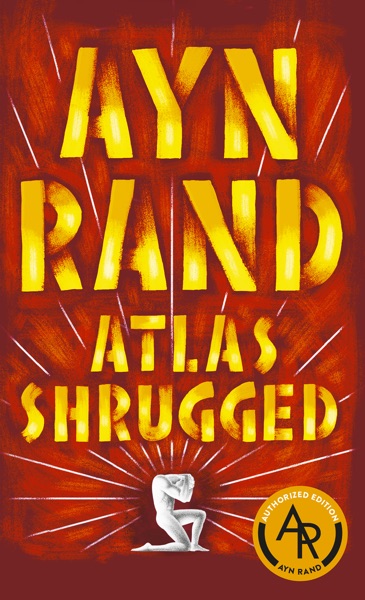
Talk to Atlas Shrugged like its author wrote you back.
Get the ideas that fit your life — not generic summaries.
- Chat with the book
- Audiobook-style main ideas
- Adapts to your life and goals
- Helps you take action
What it argues
Atlas Shrugged is Ayn Rand's philosophical novel and the fullest expression of her system, Objectivism. Published in 1957, it follows Dagny Taggart, vice president of Taggart Transcontinental railroad, and Hank Rearden, a steel magnate who has invented a superior alloy, as they struggle to keep their industries running while the United States government progressively restricts, regulates, and expropriates productive enterprise in the name of equality and social need. The central mystery of the plot is a question: who is John Galt? The answer arrives in the third act and anchors the novel's philosophical climax.
The novel's argument is that the productive minds — the engineers, entrepreneurs, and industrialists who create material value — are the true motors of civilization, and that when those minds are punished, constrained, and plundered rather than rewarded, they will eventually withdraw. The "strike of the mind" that John Galt organizes is Rand's thought experiment: what happens when the people who actually build things decide to stop? The collapse she depicts is meant to demonstrate that productive achievement, not collective welfare or self-sacrifice, is the foundation that holds civilization upright.
What it gets right
- 1.
Rand's central argument is that productive achievement is the highest human value and that the productive mind, not collective effort or redistribution, is the source of civilizational progress.
- 2.
The 'strike of the mind' thought experiment asks: what would happen if the creators and producers withdrew? Rand uses it to argue that the exploitation of the productive by the parasitic is self-defeating.
- 3.
Objectivism holds that rational self-interest is the proper ethical guide — not selfishness in the sense of cruelty, but the principled pursuit of one's own values and goals as the foundation of moral life.
What it covers
Who wrote it
Ayn Rand was born Alissa Zinovievna Rosenbaum in Saint Petersburg, Russia in 1905 and emigrated to the United States in 1926, fleeing the Soviet regime. She worked in Hollywood before publishing her first major novel, The Fountainhead, in 1943, and Atlas Shrugged in 1957. Atlas Shrugged was her final novel; she spent the remaining decades of her life writing nonfiction and developing Objectivism. She died in 1982. Her work has sold tens of millions of copies and remains highly influential in libertarian political philosophy, entrepreneurial culture, and popular discussions of capitalism and individualism.
