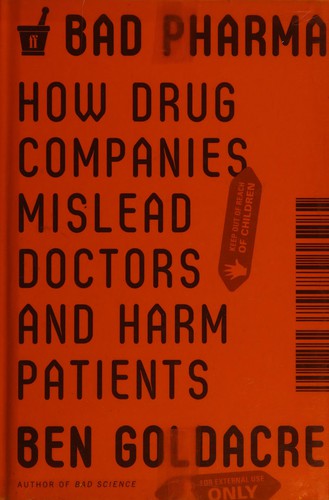
Talk to Bad Pharma like its author wrote you back.
Get the ideas that fit your life — not generic summaries.
- Chat with the book
- Audiobook-style main ideas
- Adapts to your life and goals
- Helps you take action
Bad Pharma, in detail
Bad Pharma is Ben Goldacre's sustained indictment of the pharmaceutical industry's manipulation of clinical trial evidence, and of the regulatory and academic institutions that have failed to stop it. Where Bad Science was primarily about pseudoscience and media failures, Bad Pharma is focused on a more troubling problem: the systematic corruption of the medical evidence base by companies with enormous financial incentives to produce favorable-looking results for drugs that are, in many cases, no better than existing alternatives.
The book's central argument is about missing data. Pharmaceutical companies run many trials, publish the ones with positive results, and bury the ones with negative or ambiguous findings. Regulators see trial data that companies choose to submit; doctors and patients see only what gets published. The consequence is that the published medical literature is systematically biased toward overstating treatment benefits and understating harms. Goldacre documents this through specific cases — Tamiflu, antidepressants, rosiglitazone — where missing trials materially changed the risk-benefit calculation that doctors and patients were making.
The structural problems go beyond selective publication. Goldacre covers ghost-writing of academic papers by industry employees, the design of trials to maximize statistical significance rather than clinical relevance, the use of surrogate endpoints that correlate imperfectly with outcomes patients care about, and the underpowering of trials designed to detect side effects. Each practice is documented with specific examples, and the cumulative picture is of an industry that has captured many of the institutions designed to hold it accountable.
Goldacre is explicit that most pharmaceutical researchers and many company employees are not cynical actors but people working within a system that has built-in incentives toward these behaviors. The book is not a conspiracy theory; it's an institutional analysis. His prescriptions — mandatory trial registration before results, full data sharing, reformed medical education on conflicts of interest — are technical and achievable, which is both the book's strength and, given how slowly change has come, its continuing frustration. Bad Pharma is more demanding than Bad Science but delivers a more important argument.
The big ideas
- 1.
Selective publication of clinical trial results means doctors prescribe drugs based on a biased subset of the evidence. Negative trials routinely go unpublished.
- 2.
The Tamiflu case study showed that governments stockpiled billions of dollars of medication based on studies that were never published and turned out to have inflated benefit claims.
- 3.
Trial design can legally produce favorable-looking results without fraud: using the wrong comparator, measuring surrogate endpoints, enrolling patients unlikely to show side effects.
