Talk to Bad Science like its author wrote you back.
Get the ideas that fit your life — not generic summaries.
- Chat with the book
- Audiobook-style main ideas
- Adapts to your life and goals
- Helps you take action
Bad Science, in detail
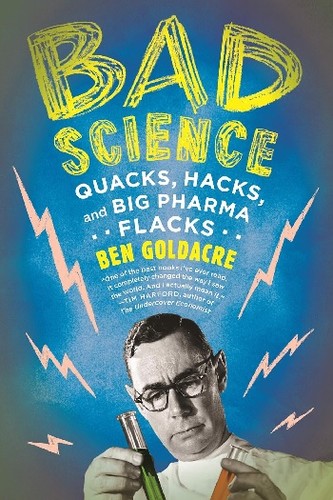
Bad Science is Ben Goldacre's dissection of how scientific evidence gets misrepresented, distorted, and invented in the service of selling health products, generating media coverage, and protecting bad actors from accountability. Goldacre is a physician and epidemiologist, and the book reads as a practiced clinician's frustration with the gap between what the evidence actually says and what gets reported to the public.
The book covers a lot of ground quickly. Goldacre starts with the epistemically simplest case — homeopathy — and uses it to establish the basic framework: what would good evidence look like, why does anecdote fail as evidence, what does a placebo-controlled trial actually measure? From there he moves through nutritionists whose credentials don't hold up, the brain gym movement in British schools, the statistical manipulation behind cosmetics industry claims, and the catastrophic media handling of the MMR-autism controversy.
The MMR chapter is the book's moral center. Andrew Wakefield's fraudulent 1998 Lancet study, the media's amplification of the scare, and the measles deaths that followed are treated not as a simple story of one bad actor but as a systemic failure: of peer review, of science journalism, of the media's fundamental misunderstanding of what a study finding means. Goldacre's analysis of why the MMR story played out the way it did is among the most useful things any popular science book has done with a case study of scientific failure.
Goldacre writes with considerable wit and doesn't pretend to neutrality. He is openly contemptuous of the homeopaths, detox entrepreneurs, and nutritionists he examines, and the book has been criticized for its combative tone. But his core argument — that citizens in a democracy need the basic tools to evaluate evidence themselves rather than deferring to media coverage — is difficult to dispute. Bad Science is particularly useful as a companion to any other science book, not because it teaches you the science but because it teaches you to read the claims.
The big ideas
- 1.
Anecdote is not evidence. The reason science uses controlled trials is to separate the effect of the treatment from everything else that changed at the same time.
- 2.
The placebo effect is real and measurable, which is why it must be controlled for. Many ineffective treatments produce genuine improvement in how patients feel without affecting the underlying disease.
- 3.
Statistical literacy is a prerequisite for evaluating health claims. Relative risk reduction is nearly always more impressive than absolute risk reduction — and the latter is what matters.
