Talk to Barbarian Days like its author wrote you back.
Get the ideas that fit your life — not generic summaries.
- Chat with the book
- Audiobook-style main ideas
- Adapts to your life and goals
- Helps you take action
Barbarian Days, in detail
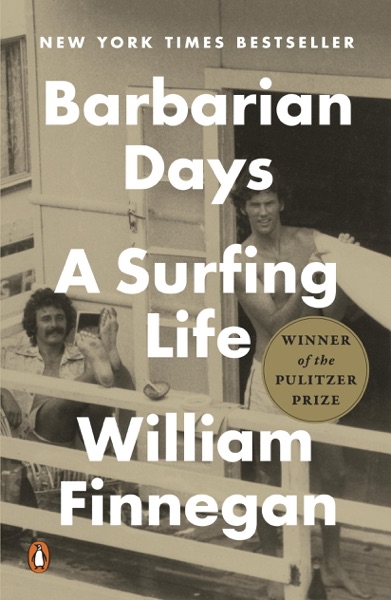
Barbarian Days is William Finnegan's memoir of a life spent surfing — from his childhood in Los Angeles and Hawaii through decades of obsessive searching for waves across the Pacific, Asia, Africa, and eventually the cold waters of New York. It won the 2016 Pulitzer Prize for biography or autobiography. Finnegan, a longtime staff writer for The New Yorker, brings the same precision and moral seriousness to surfing that he brings to the conflict zones he has covered professionally. The result is the best book ever written about surfing, and one of the best American memoirs of recent decades.
The memoir does not romanticize surfing so much as describe what it actually demands: years of physical dedication, the mathematical study of ocean behavior, the specific geography of particular breaks, and the elaborate social hierarchies that form around the best waves. Finnegan is interested in the way surfing creates a second life running parallel to ordinary life — a parallel world with its own geography, its own status systems, its own obsessive pleasures. He writes about his most important surf breaks — Honolua Bay, a reef in Madeira, the fearsome waves at Ocean Beach in San Francisco — with a precision that is both technical and deeply personal.
The book is also a portrait of male friendship, particularly the partnership between Finnegan and Bryan Di Salvatore, with whom he traveled the Pacific for years, sharing waves and surfing secrets with a ferocity that excluded others. The ethic of surf tribalism — the territorial aggression, the closed knowledge passed between serious surfers, the pleasure of having a secret spot — runs throughout. Finnegan is honest about the costs this obsession imposed on his relationships, his career, and his sense of proportion.
Non-surfers often worry they'll find this book inaccessible. They typically don't. Finnegan's prose is good enough to carry anyone who is curious about the nature of obsessive mastery, travel with purpose, and the strange durability of passions formed in adolescence. The ocean descriptions are physical and precise, and the book's emotional argument — that chasing a passion across decades shapes character in ways that conventional achievement cannot replicate — is legible whether or not the reader has ever seen a surfboard.
The big ideas
- 1.
Surfing, for Finnegan, is less a sport than a parallel world with its own geography, social codes, and rewards. Understanding it requires treating it with the same seriousness as any other demanding practice.
- 2.
Obsession is not the same as enthusiasm. The book traces how a true obsession reshapes your life's geography, your relationships, and the decisions you make about where and how to live.
- 3.
The best surf breaks require years of study — reading swell patterns, tide charts, seasonal changes. Surfing at the highest level is as much cognitive as physical.
