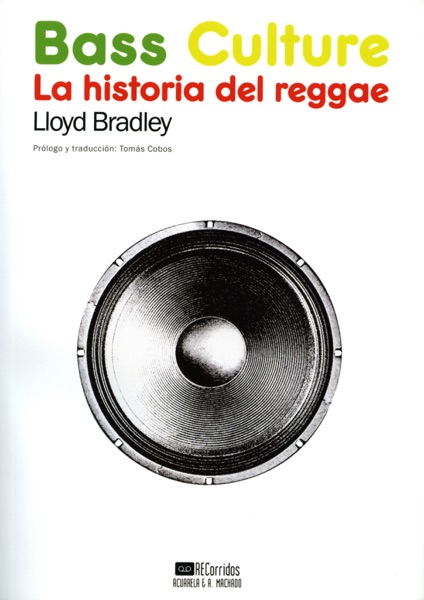
Talk to Bass Culture: When Reggae Was King like its author wrote you back.
Get the ideas that fit your life — not generic summaries.
- Chat with the book
- Audiobook-style main ideas
- Adapts to your life and goals
- Helps you take action
What it argues
Lloyd Bradley's Bass Culture is the definitive popular history of Jamaican music from the late 1940s through the 1990s, tracing the full arc from mento and ska through rocksteady, reggae, dancehall, and ragga. At over six hundred pages, it is both comprehensive and genuinely readable — a rare combination in genre music history. Bradley, a British music journalist who has spent decades documenting Jamaican and its diaspora in the UK, brings an insider's ear and an outsider's analytical clarity.
The book opens with the social and economic conditions that produced the music: the grinding poverty of Kingston's West End, the sound system culture that emerged as communities unable to afford live music built their own entertainment infrastructure, and the complex relationship between Jamaica's Black majority, its political class, and a colonial musical establishment that initially patronized and then attempted to commercialize what it didn't fully understand. Sound system battles — where rival operators competed by finding exclusive recordings — are presented as both entertainment and social ritual, the crucible from which producers, singers, and eventually an entire industry emerged.
What it gets right
- 1.
Sound system culture — rival operators competing through exclusive records and engineering quality — was the institutional foundation from which the entire Jamaican music industry grew.
- 2.
Dub music inverted conventional music production. By treating the recorded track as raw material to be stripped, delayed, and echoed, King Tubby and Lee Perry invented a new relationship between producer and listener.
- 3.
Bob Marley's international success required a translation of Rastafarian themes into a register that white rock audiences could receive. The translation was necessary and costly in terms of cultural specificity.
What it covers
Who wrote it
Lloyd Bradley is a British music journalist, author, and broadcaster who has spent three decades documenting reggae, soul, and their diaspora. In addition to Bass Culture, he wrote Reggae: The Story of Jamaican Music (2000), a companion volume to a BBC television series, and This Is Reggae Music: The Story of Jamaica's Music (2001). He has written for The Guardian, Q Magazine, and numerous specialist music publications. Bradley was born in London to Jamaican parents and has described his work as an attempt to give serious critical attention to a music that shaped his upbringing.
