Business · Book club
The Best Place to Work book club questions
Here are 11 book club questions for The Best Place to Work by Ron Friedman, ordered to open easily and end somewhere worth arguing about. Copy them, print them, or bring them up one at a time.
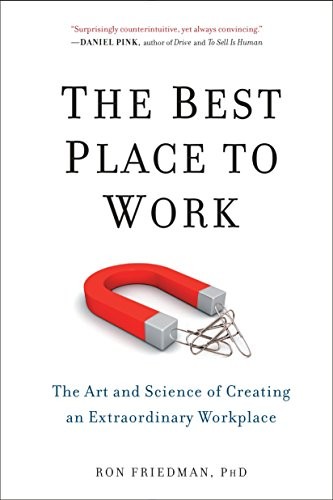
The Best Place to Work is Ron Friedman's survey of psychological and social science research on what actually makes workplaces effective.
Ron Friedman · 2014
Full summary and key takeaways →The 11 questions
- 1.
Think about a time you did your best work. How many of the conditions Friedman describes — autonomy, competence, relatedness — were present?
- 2.
Where in your current work environment is compliance being optimized at the expense of performance? What's one thing you could change?
- 3.
How does your organization actually treat failure? Does the stated policy match the experienced reality for people who report to you?
- 4.
Friedman argues that extrinsic rewards often undermine intrinsic motivation. Have you seen that effect in your own experience or in your team?
- 5.
If your team were asked anonymously whether they felt psychologically safe to speak up, what would they say? What do you base that on?
- 6.
The feedback research says annual reviews are nearly useless. What would more effective feedback look like in your specific context?
- 7.
Social connection as a performance variable: do you know whether people on your team have genuine relationships at work, or are they professionally isolated?
- 8.
Workspace design affects output. What's one physical or environmental change that would likely improve the quality of your team's work?
- 9.
Autonomy is a strong predictor of performance. Are there places where you're granting less autonomy than you could because of habit rather than necessity?
- 10.
The book covers a lot of ground quickly. Which finding surprised you most, and which felt like confirmation of something you already believed?
- 11.
Where in your organization do you see a gap between the management practices being used and what the research here would recommend?
How to run the discussion
- Pick six to eight, not all of them. An hour of real discussion covers fewer questions than anyone expects, and racing the list is what makes a book club feel like homework.
- Open with what people noticed, not what they concluded. Asking for a verdict first hardens opinions before anyone has heard each other.
- Let the disagreement run. The questions below that split a room are the ones worth the time; the ones everyone answers the same way can be skipped.
- Ask the quiet person a specific question. A direct, narrow question is far easier to answer than an open invitation to contribute.
Themes worth steering toward
If the conversation stalls, these are the threads that usually restart it.
Common questions
What are good book club questions for The Best Place to Work?
Here are 11 book club questions for The Best Place to Work by Ron Friedman, ordered to open easily and end somewhere worth arguing about. The strongest openers ask what each reader noticed rather than what they concluded, and the discussion usually turns on workplace design, motivation, psychological safety.
How long should a book club discussion of The Best Place to Work last?
Most groups run 60 to 90 minutes of actual discussion. That is roughly six to eight questions, not all of them, so pick the ones that suit your group rather than working down the list in order.
What are the main themes in The Best Place to Work?
Workplace design, Motivation, Psychological safety, Employee performance, Organizational culture. Those are the threads most likely to divide a room, which makes them the useful places to steer a discussion that has gone quiet.
Picking the next one? See books like The Best Place to Work or questions for other book club picks.
