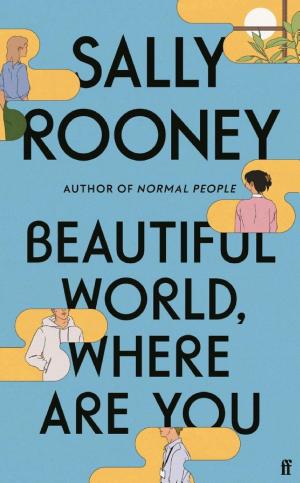
Beautiful World, Where Are You by Sally Rooney is a 2021 literary fiction book about fame and artistic labor, friendship and intimacy, late capitalism and meaning. The novel's central claim is that friendship may be the most durable and honest form of love available — more honest than romantic love because it is less laden with projection.
Summary
Beautiful World, Where Are You follows two women in their late twenties — Alice, a novelist recovering from a breakdown in a rented house in rural Ireland, and Eileen, her best friend working at a literary magazine in Dublin. Both are in the orbit of men: Alice begins an unlikely relationship with Felix, a warehouse worker she meets on a dating app; Eileen falls back toward Simon, a longtime friend she has always loved and kept at a careful distance. The novel moves through the four characters' lives in alternating chapters, punctuated by long, essayistic emails that Alice and Eileen exchange about civilization, meaning, and what they want from their lives.
The emails are the novel's most distinctive formal element and the source of most of its ideas. They contain Rooney's thinking about late capitalism, celebrity, the Bronze Age, religious feeling, and the question implied by the title: whether the beautiful world — a world capable of sustaining beauty, intimacy, and meaning — still exists or has been foreclosed by something. These passages will divide readers sharply. Some will find them the novel's most alive section; others will find them lectures delivered through character proxies.
Rooney's style is as recognizable here as in Normal People and Conversations with Friends — close third-person narration, long sentences, emotional restraint, a precision about social dynamics that approaches sociology. The romantic relationships are rendered with her usual double attention to desire and to the power dynamics operating beneath desire. Felix is a more unusual creation than Rooney's earlier male leads: deliberately unpolished, working class, unwilling to perform sensitivity, and treated with real affection rather than condescension.
This is the most explicit novel Rooney has written about what it costs to be a writer and a public figure. Alice's breakdown and her hostility to her own celebrity are clearly autobiographical in texture even if not in fact. Readers who loved her earlier work will find this familiar and more considered; readers new to Rooney will find the essayistic passages an acquired taste. As a novel about what friendship means when you're running out of frameworks for larger meaning, it is sharply felt.
Talk to Beautiful World, Where Are You like its author wrote you back.
Get the ideas that fit your life — not generic summaries.
- Chat with the book
- Audiobook-style main ideas
- Adapts to your life and goals
- Helps you take action
Key takeaways
- 1.
The novel's central claim is that friendship may be the most durable and honest form of love available — more honest than romantic love because it is less laden with projection.
- 2.
Alice's celebrity and breakdown raise questions the novel doesn't fully answer: whether literary success requires a particular kind of self-exposure that is not survivable for some people.
- 3.
Felix is a deliberate provocation — a man who refuses to read the emotional temperature of every room and perform accordingly, and the novel treats that refusal as interesting rather than a failing.
- 4.
The emails between Alice and Eileen are essayistic to the point of being philosophical, and Rooney uses them to argue that the decline of collective meaning-making (religion, community) has left individuals in a particular kind of poverty.
- 5.
Desire in the novel is consistently complicated by self-awareness: the characters know what they want, know why it's probably a bad idea, and do it anyway — which is more accurate to adult experience than most fiction allows.
- 6.
Simon is drawn as someone capable of genuine steadiness, and the novel treats steadiness as an underrated virtue rather than dullness.
- 7.
The question of what beautiful things cost — in labor, in attention, in the destruction of other things — runs through every chapter and is never resolved, which is probably honest.
- 8.
Rooney's prose discipline — what she leaves out, what she never names directly — does as much work as what she includes.
Discussion questions
Use these on your own, with a book club, or as chat starters in Superbook. Book club version, ready to copy or print →
- 1.
Alice's emails contain extended essays on civilization, the Bronze Age, and capitalism. Did you find those passages illuminating or didactic?
- 2.
Felix refuses to perform the emotional intelligence that Alice's world rewards. Is the novel romanticizing him, or taking him seriously?
- 3.
Alice's breakdown is never fully explained. What do you think broke her? Was it fame itself, or something fame revealed?
- 4.
The friendship between Alice and Eileen seems more central to the novel than either romantic relationship. Do you agree? What does the novel say about what friendship offers that romance doesn't?
- 5.
Eileen and Simon have been circling each other for years. Why do you think she's been keeping him at a distance? Does the novel make her reasons clear?
- 6.
The title asks a question — Beautiful World, Where Are You — and the novel doesn't answer it directly. What's your answer after reading?
- 7.
Rooney has been criticized for writing characters who are too articulate about their own psychology. Is that a fair criticism of this novel?
- 8.
Compare the romantic relationships in this book to those in Normal People. What's different about how Rooney treats desire and power here?
- 9.
The novel ends with some hopefulness. Does it earn that hopefulness, or does it feel imposed?
- 10.
Alice is uncomfortable with her own celebrity but continues to write and publish. Is that inconsistency a character flaw or just realistic?
- 11.
The characters are preoccupied with whether it's possible to live well in the current world. Do you find their preoccupation self-indulgent or legitimate?
- 12.
If you had to summarize what the novel thinks the beautiful world was and where it went, what would you say?
Themes
Frequently asked questions
-
Is Beautiful World, Where Are You worth reading?
For Rooney readers, yes — it's her most ambitious and most self-aware work. For newcomers, it may be more rewarding to start with Normal People, which has a tighter emotional core and less essayistic digression. Beautiful World is better with context about her project.
-
Is this book as good as Normal People?
Different. Normal People has a more concentrated emotional impact and a cleaner structure. Beautiful World is more intellectually ambitious and more formally unusual, but it has a wider emotional range that is harder to sustain. Neither is definitively better; they're solving different problems.
-
What are the long emails about in Beautiful World?
Alice and Eileen exchange long, essayistic emails between chapters about civilization, celebrity, the decline of meaning-making, sex, friendship, and religion. They are partly Rooney's thinking about the world delivered through character, and partly a formal device that lets her write things the narrative voice cannot.
-
Is there a TV adaptation?
As of 2025, no adaptation has aired, though rights have been discussed. The novel's essayistic structure makes it harder to adapt than Normal People.
-
Who shouldn't read Beautiful World, Where Are You?
Readers who found the emails in the novel to be lectures rather than dialogue will find their patience tested. Also readers who want clear emotional payoffs — the novel's resolution is real but quiet.
-
Is the novel autobiographical?
Rooney has acknowledged that Alice's experience of literary fame and its discontents draws on her own, and the Irish setting is personal. But the plot is fictional and the claim to autobiography is impressionistic rather than direct.