History · Book club
Behind the Beautiful Forevers: Life, Death, and Hope in a Mumbai Undercity book club questions
Here are 12 book club questions for Behind the Beautiful Forevers: Life, Death, and Hope in a Mumbai Undercity by Katherine Boo, ordered to open easily and end somewhere worth arguing about. Copy them, print them, or bring them up one at a time.
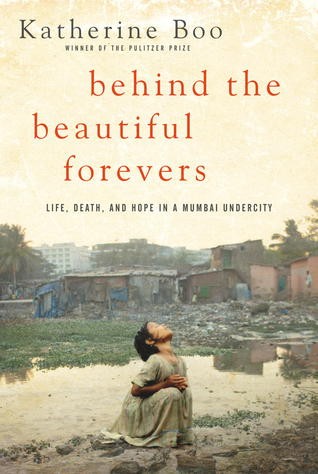
Behind the Beautiful Forevers is Katherine Boo's account of three years spent in Annawadi, a Mumbai slum built on reclaimed land next to the international airport.
Katherine Boo · 2012 · 5h 30m
Full summary and key takeaways →The 12 questions
- 1.
Boo writes that Annawadi residents corrupt each other almost as much as officials corrupt them. What does that do to the standard narrative of the poor as victims of the powerful?
- 2.
Abdul's business depends on a functioning market for scrap metal, which itself depends on global commodity prices. How does the global economy show up in Annawadi's daily life?
- 3.
The book never offers a prescription. Does that absence feel like discipline or evasion? What would a satisfying ending have required?
- 4.
Boo spent years in Annawadi as an outsider with resources these residents didn't have. How does that asymmetry shape what she was able to see and what she couldn't?
- 5.
The Beautiful Forevers advertisements are for Italian tiles — a product no Annawadi resident could afford or use. What does that image say about aspiration and its costs?
- 6.
Corruption in the book operates through small amounts — bribes of a few hundred rupees. Why is small-scale corruption so hard to fight, and what would replacing it require?
- 7.
Fatima's act of self-immolation is the hinge of the book. How do you understand what she did, and what does the legal aftermath say about how her life was valued?
- 8.
The slum sits next to one of the world's busiest international airports. What does that proximity tell us about how global infrastructure relates to local inequality?
- 9.
Did reading this book change how you think about the place where you live? What does your city's version of Annawadi look like?
- 10.
Boo worked with translators and over many years. What are the limits of that kind of reporting, and what does it make possible that a shorter visit couldn't?
- 11.
The book doesn't romanticize community solidarity among the poor. What does it suggest instead about how people under extreme stress relate to each other?
- 12.
Which resident of Annawadi stayed with you longest after finishing, and why?
How to run the discussion
- Pick six to eight, not all of them. An hour of real discussion covers fewer questions than anyone expects, and racing the list is what makes a book club feel like homework.
- Open with what people noticed, not what they concluded. Asking for a verdict first hardens opinions before anyone has heard each other.
- Let the disagreement run. The questions below that split a room are the ones worth the time; the ones everyone answers the same way can be skipped.
- Ask the quiet person a specific question. A direct, narrow question is far easier to answer than an open invitation to contribute.
Themes worth steering toward
If the conversation stalls, these are the threads that usually restart it.
Common questions
What are good book club questions for Behind the Beautiful Forevers: Life, Death, and Hope in a Mumbai Undercity?
Here are 12 book club questions for Behind the Beautiful Forevers: Life, Death, and Hope in a Mumbai Undercity by Katherine Boo, ordered to open easily and end somewhere worth arguing about. The strongest openers ask what each reader noticed rather than what they concluded, and the discussion usually turns on poverty, inequality, resilience.
How long should a book club discussion of Behind the Beautiful Forevers: Life, Death, and Hope in a Mumbai Undercity last?
Most groups run 60 to 90 minutes of actual discussion. That is roughly six to eight questions, not all of them, so pick the ones that suit your group rather than working down the list in order.
What are the main themes in Behind the Beautiful Forevers: Life, Death, and Hope in a Mumbai Undercity?
Poverty, Inequality, Resilience, Corruption, Aspiration. Those are the threads most likely to divide a room, which makes them the useful places to steer a discussion that has gone quiet.
Picking the next one? See books like Behind the Beautiful Forevers: Life, Death, and Hope in a Mumbai Undercity or questions for other book club picks.
