Talk to Beloved like its author wrote you back.
Get the ideas that fit your life — not generic summaries.
- Chat with the book
- Audiobook-style main ideas
- Adapts to your life and goals
- Helps you take action
What it argues
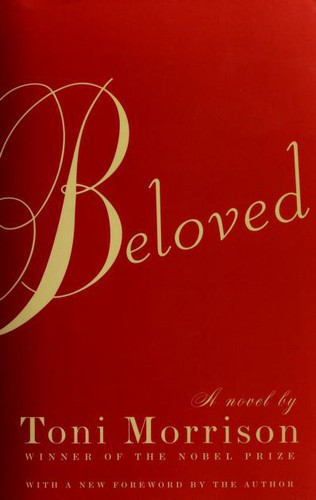
Beloved is set in post-Civil War Ohio, where Sethe, a formerly enslaved woman, lives with her daughter Denver in a house shadowed by the ghost of a baby she killed rather than let be taken back into slavery. When a man named Paul D, who knew Sethe at the Kentucky plantation called Sweet Home, arrives and briefly drives off the ghost, the house is soon occupied by a young woman named Beloved — whose presence reshapes and unsettles every life she touches.
The novel is fundamentally about what Morrison calls "rememory": the idea that traumatic events don't merely leave memories but physical residue, imprinted on places and people whether you want them or not. Sethe's act of infanticide is not treated as monstrous in a simple sense but as the extreme logic of a love distorted and weaponized by slavery — the belief that death was preferable to a life she had lived. The novel asks not whether Sethe was right but what it means to survive the unspeakable, and whether survival and wholeness are even compatible.
What it gets right
- 1.
Trauma doesn't disappear — it accumulates in the body and the landscape, surfacing unbidden even decades later. Morrison calls this rememory and treats it as almost physical law.
- 2.
Sethe's infanticide is the novel's moral hinge, and Morrison refuses to simplify it. The act is both comprehensible and catastrophic, a love shaped entirely by what slavery made possible.
- 3.
Beloved herself functions as grief made flesh: the thing that cannot be named or integrated, demanding acknowledgment before release is possible.
What it covers
Who wrote it
Toni Morrison (1931–2019) was an American novelist, editor, and professor whose work centered the experiences of Black Americans with a linguistic precision and mythic depth unmatched in twentieth-century fiction. She won the Pulitzer Prize for Beloved in 1988 and the Nobel Prize in Literature in 1993. Her other major novels include The Bluest Eye, Sula, Song of Solomon, Jazz, and Paradise. She taught at Princeton for nearly two decades and was also a foundational editor at Random House, where she championed writers including Toni Cade Bambara and Angela Davis.
