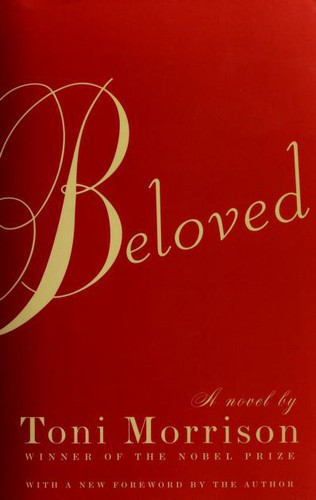
Beloved by Toni Morrison is a 1987 literary fiction book about memory and trauma, slavery's legacy, motherhood. Trauma doesn't disappear — it accumulates in the body and the landscape, surfacing unbidden even decades later. Morrison calls this rememory and treats it as almost physical law.
Summary
Beloved is set in post-Civil War Ohio, where Sethe, a formerly enslaved woman, lives with her daughter Denver in a house shadowed by the ghost of a baby she killed rather than let be taken back into slavery. When a man named Paul D, who knew Sethe at the Kentucky plantation called Sweet Home, arrives and briefly drives off the ghost, the house is soon occupied by a young woman named Beloved — whose presence reshapes and unsettles every life she touches.
The novel is fundamentally about what Morrison calls "rememory": the idea that traumatic events don't merely leave memories but physical residue, imprinted on places and people whether you want them or not. Sethe's act of infanticide is not treated as monstrous in a simple sense but as the extreme logic of a love distorted and weaponized by slavery — the belief that death was preferable to a life she had lived. The novel asks not whether Sethe was right but what it means to survive the unspeakable, and whether survival and wholeness are even compatible.
Morrison's prose refuses conventional chronology. The narrative moves in loops, fragments, and rushes of interior monologue — especially a long unpunctuated stream-of-consciousness section late in the book that is among the most formally daring passages in American fiction. This structure isn't ornamentation; it mirrors how trauma actually works, surfacing and submerging without warning. The result is a novel that demands active reading and rewards it with an emotional charge few books achieve.
Beloved won the Pulitzer Prize in 1988 and is considered Morrison's masterwork by most critics. Readers who want linear plot, or who find the supernatural elements disorienting alongside the historical horror, sometimes struggle with it. But for readers willing to meet the book on its own terms, it is an experience rather than just a story — the closest American literary fiction has come to turning the history of slavery into felt knowledge.
Talk to Beloved like its author wrote you back.
Get the ideas that fit your life — not generic summaries.
- Chat with the book
- Audiobook-style main ideas
- Adapts to your life and goals
- Helps you take action
Key takeaways
- 1.
Trauma doesn't disappear — it accumulates in the body and the landscape, surfacing unbidden even decades later. Morrison calls this rememory and treats it as almost physical law.
- 2.
Sethe's infanticide is the novel's moral hinge, and Morrison refuses to simplify it. The act is both comprehensible and catastrophic, a love shaped entirely by what slavery made possible.
- 3.
Beloved herself functions as grief made flesh: the thing that cannot be named or integrated, demanding acknowledgment before release is possible.
- 4.
Paul D's masculinity is constructed around containing emotion — his tobacco tin replacing his heart. His arc is about what happens when that containment fails.
- 5.
The community's role is double-edged: the Black community of Cincinnati could have warned Sethe about schoolteacher's arrival but didn't, a collective failure the novel holds alongside its portrait of communal resilience.
- 6.
Denver's isolation and eventual emergence into the community represents the generation that must move forward without being consumed by what their parents survived.
- 7.
Morrison insists on the interiority and full humanity of enslaved people, pushing back against historical accounts that recorded them as property or statistics.
- 8.
The novel's final word — 'Beloved' — is also its first, and its repetition frames the entire book as an act of naming: giving the dead a place in language and memory.
Discussion questions
Use these on your own, with a book club, or as chat starters in Superbook. Book club version, ready to copy or print →
- 1.
Sethe tells Paul D she 'took her [Beloved's] face away' to protect her from slavery. Do you think the novel endorses her logic, condemns it, or refuses to judge?
- 2.
Morrison structures time non-linearly. What does the fragmented narrative do that a straightforward account of the same events couldn't?
- 3.
Beloved's presence seems to intensify each character's deepest damage. What does she represent for Sethe versus Denver versus Paul D?
- 4.
The Black community of Cincinnati withheld warning Sethe about schoolteacher's arrival. How does the novel treat this failure — as understandable, culpable, or both?
- 5.
The long unpunctuated interior monologue late in the novel is formally extreme. Did it work for you? What is Morrison doing that regular narration couldn't accomplish?
- 6.
Paul D keeps his emotions in a 'tobacco tin' inside his chest. Is this a survival strategy or a form of damage? When does it become one rather than the other?
- 7.
Slavery in this novel doesn't appear only through violence — it appears through the colonization of identity, the theft of children, the corruption of love. Which of these felt most devastating to you?
- 8.
Denver spends most of the novel in a kind of suspended childhood. What breaks her out of it, and does her emergence feel earned?
- 9.
The novel ends on a note of forgetting — 'This is not a story to pass on.' What does Morrison mean, and does the ending feel like resolution or refusal?
- 10.
Beloved won the Pulitzer in 1988. Does it feel like the kind of book that gets recognized and read, or does it feel like a book that should be read more than it is?
- 11.
Morrison said she wanted to write a novel that would not comfort white readers. Did it comfort you, or did it do something else?
- 12.
Compared to Between the World and Me — another work attempting to transmit the weight of anti-Black violence — where does Beloved land differently?
Themes
Frequently asked questions
-
Is Beloved difficult to read?
Yes, in two ways. The non-linear structure and Morrison's dense, layered prose require attention. And the subject matter — the intimate violence of slavery — is genuinely hard to sit with. This is intentional. Morrison wanted reading it to be work, not comfort. Most readers find the difficulty worth it, but it is not a book you can skim.
-
What is Beloved actually about, without spoilers?
A formerly enslaved woman in post-Civil War Ohio is haunted — literally and figuratively — by the child she lost. The novel explores how people survive trauma they cannot fully speak, and what happens when the past refuses to stay past.
-
Why is Beloved considered one of the greatest American novels?
It does something few novels attempt: it puts the reader inside the psychic reality of slavery's aftermath rather than observing it from outside. The prose, the structure, and the supernatural elements all serve that project. It changed what American fiction thought it could do.
-
Who should not read Beloved?
Readers who find magical realism destabilizing alongside historical horror may struggle. So will readers who need a narrator they can fully trust or a plot that resolves cleanly. The novel is deliberately unsettling in form as well as content.
-
Is there a film adaptation?
Yes. Jonathan Demme directed a film in 1998 starring Oprah Winfrey (who also produced) as Sethe and Thandie Newton as Beloved. It is serious and ambitious but widely considered to fall short of the novel's impact.
Similar books
Between the World and Me
Ta-Nehisi Coates
Stamped from the Beginning: The Definitive History of Racist Ideas in America
Ibram X. Kendi
The New Jim Crow: Mass Incarceration in the Age of Colorblindness
Michelle Alexander

A Long Way Gone: Memoirs of a Boy Soldier
Ishmael Beah
