Talk to Better like its author wrote you back.
Get the ideas that fit your life — not generic summaries.
- Chat with the book
- Audiobook-style main ideas
- Adapts to your life and goals
- Helps you take action
Better, in detail
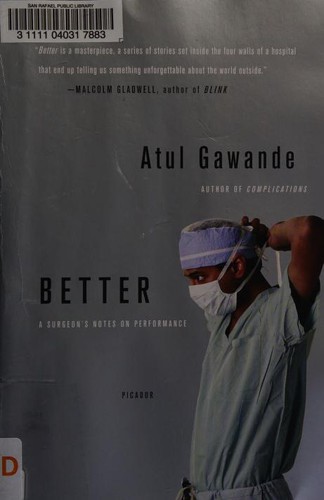
Better is Atul Gawande's examination of what it means to perform well in medicine, a field where the stakes are as high as they get and where the gap between ordinary and excellent care routinely determines who lives and who dies. Gawande is a surgeon and a journalist, and the book reads like both — precise clinical observation combined with a reporter's eye for the telling detail and the structural problem that most people miss.
The book is organized around three qualities Gawande argues define the best medical practitioners: diligence, doing right, and ingenuity. Through a series of linked essays he traces these qualities across wildly different contexts — a hand-washing campaign that hospitals couldn't get doctors to follow, the military medical corps working in Iraq, the ethics of physicians who administer lethal injections, the improbable improvements in cystic fibrosis outcomes at one Cincinnati hospital. Each essay makes a specific, grounded argument rather than gesturing toward inspiration.
One of the book's central cases is the cystic fibrosis story. Gawande went looking for why outcomes at different CF centers varied so dramatically — and found that the best center's success came down to one physician who was relentlessly systematic and insistent on tracking every number. The lesson isn't that this doctor was heroic; it's that measurement and accountability, applied with discipline, move the needle when intuition and effort alone don't. That's a harder truth than most medicine-adjacent books want to deliver.
The final essay, a kind of coda, gives five pieces of advice for doing better under any circumstances: ask an unscripted question, don't complain, count something, write something, change something. It's advice calibrated for people working inside imperfect systems rather than dreaming about perfect ones. Gawande's recurring argument is that improvement doesn't come from inspiration but from the slow, unglamorous work of measurement, iteration, and the willingness to be held accountable.
The big ideas
- 1.
Performance in medicine varies far more than patients realize, and much of that variation is preventable rather than inevitable.
- 2.
Diligence — following through on what you already know to do — is underrated. Hand-washing compliance is mundane; its absence kills people.
- 3.
Measurement is a prerequisite for improvement. The best CF center succeeded not because of superior talent but because of meticulous tracking and accountability.
