Talk to Better Than Before like its author wrote you back.
Get the ideas that fit your life — not generic summaries.
- Chat with the book
- Audiobook-style main ideas
- Adapts to your life and goals
- Helps you take action
Better Than Before, in detail
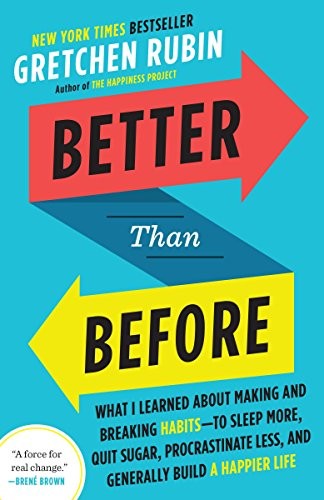
Better Than Before is Gretchen Rubin's synthesis of years of research and personal experimentation on habits. Rubin's specific contribution to the crowded habit literature is the observation that different people respond to habits differently based on how they relate to inner expectations (self-imposed commitments) versus outer expectations (commitments to others). This observation produces her Four Tendencies framework: Upholders (who meet both inner and outer expectations), Questioners (who meet inner expectations but resist outer ones), Obligers (who meet outer expectations but struggle with inner ones), and Rebels (who resist all expectations).
The framework is the book's most valuable and original contribution. It explains why the same habit advice works for some people and fails for others: an Obliger, who struggles to keep commitments to herself, responds well to external accountability structures. A Rebel, who resists any directed behavior, needs to frame habits as an expression of identity rather than an obligation. A Questioner needs to understand the reason behind a habit before committing to it.
The rest of the book is organized around strategies for building habits, each one analyzed through the lens of which tendencies it serves. Convenience, inconvenience, monitoring, identity, scheduling, accountability — Rubin examines each strategy honestly, noting which personality types they work for and which they don't. The approach is more individualized than most habit books, which tend to offer universal prescriptions.
Rubin is honest that habits are not a problem to be solved once but a practice to be maintained. She is also honest about the limits of self-knowledge: most people overestimate how disciplined they will be in the future, underestimate how much their environment influences their behavior, and mistake familiarity for habit strength.
The big ideas
- 1.
The Four Tendencies — Upholder, Questioner, Obliger, Rebel — describe how different people respond to inner and outer expectations. Habit strategies that work for one tendency often fail for another.
- 2.
Obligers, the most common tendency, struggle to maintain habits for themselves but are highly reliable when accountable to others. External accountability structures are essential for Obligers.
- 3.
The clean slate effect: new beginnings — new year, new job, new home — lower the psychological cost of starting a new habit. Using these moments intentionally is more effective than trying to change at a random time.
