Between Two Kingdoms: A Memoir of a Life Interrupted by Suleika Jaouad is a 2021 memoir book about illness, survival, identity. Survival is not the end of illness; it is a threshold into a different kind of uncertainty where identity, purpose, and belonging all have to be reconstructed.
Summary
Suleika Jaouad was twenty-two and newly graduated, living in Paris with her first real job and a boyfriend, when she was diagnosed with acute myeloid leukemia. Between Two Kingdoms is the account of the four years that followed — years of chemotherapy, bone marrow transplants, isolation, and the strange suspended existence of serious illness — and of the years afterward, when she had to figure out who she was once survival was no longer the only task.
The title names a condition Jaouad returns to throughout: the space between being sick and being well, between the person she was before and whoever she might become. She writes about the seductiveness of the sick role, the difficulty of accepting care, and the way illness reorganizes every relationship. Her parents' marriage frays under the pressure of her treatment. Her boyfriend stays, then doesn't. She falls for a fellow patient who later dies. The hospital becomes, paradoxically, a kind of home — more familiar than the outside world that kept going without her.
After her transplant succeeds, Jaouad does something unexpected: she spends one hundred days driving across the country in a secondhand car to visit strangers who had written to her column in the New York Times during her treatment. The road trip occupies the second half of the book and functions as a deliberate act of re-entry. Each encounter is a small study in what people carry — grief, estrangement, illness of their own — and what it costs to reach out to someone else in their worst moment.
Jaouad writes with control and an eye for the specific detail that earns an emotional landing. She doesn't prettify recovery or suggest that surviving cancer delivers meaning on its own. The book is most useful for anyone navigating serious illness, caregiving, or the particular disorientation of returning to ordinary life after a prolonged crisis — not because it offers answers, but because it maps the territory honestly.
Talk to Between Two Kingdoms: A Memoir of a Life Interrupted like its author wrote you back.
Get the ideas that fit your life — not generic summaries.
- Chat with the book
- Audiobook-style main ideas
- Adapts to your life and goals
- Helps you take action
Key takeaways
- 1.
Survival is not the end of illness; it is a threshold into a different kind of uncertainty where identity, purpose, and belonging all have to be reconstructed.
- 2.
The space 'between two kingdoms' — not sick enough to be a patient, not well enough to be a civilian — is its own country, with its own rules and disorientation.
- 3.
Serious illness reorganizes relationships in ways that are often permanent. It reveals who shows up and what the presence of suffering actually costs people.
- 4.
Accepting care gracefully is its own skill, distinct from being strong. Many people who navigate illness well struggle more with receiving help than with enduring treatment.
- 5.
Writing about difficulty during the difficulty itself — Jaouad's Times column — gave her an audience and a sense of purpose that turned out to be as important as medical care.
- 6.
Re-entry into ordinary life after prolonged crisis is not automatic. It requires deliberate action and a willingness to be awkward, uncertain, and a beginner again.
- 7.
Grief and survivorship coexist. Being alive when others with your diagnosis are not creates its own specific moral weight.
- 8.
The road trip structure — visiting strangers who had written to her — is Jaouad's argument that connection is an active practice, not a state you fall into.
Discussion questions
Use these on your own, with a book club, or as chat starters in Superbook. Book club version, ready to copy or print →
- 1.
Jaouad describes being suspended between two kingdoms — not sick, not well. Have you experienced an analogous in-between state, and what did you do to move through it?
- 2.
She writes that illness became a strange kind of home. What does it mean when the disrupted state starts to feel safer than the life you're trying to return to?
- 3.
How did illness reshape Jaouad's close relationships? Which of those shifts felt inevitable and which felt avoidable?
- 4.
The road trip to visit strangers seems like an unusual form of recovery. What does Jaouad seem to be looking for in those visits, and do you think she found it?
- 5.
Jaouad argues that survivorship has its own difficulties separate from being sick. What assumptions do healthy people tend to make about how someone should feel after surviving a serious illness?
- 6.
Her Times column was both documentation and community-building. Have you seen writing, art, or public sharing function therapeutically in someone's real crisis? What were the limits of that?
- 7.
Several of the strangers she visits are carrying their own unspoken grief. What does their willingness to open up to her say about what people need when suffering?
- 8.
Jaouad's identity was largely undefined when she got sick — she was just starting her adult life. How does that timing shape the particular loss she's describing?
- 9.
What does the book suggest about the difference between physical recovery and psychological recovery?
- 10.
Jaouad describes her parents' marriage deteriorating under the pressure of her illness. How do families under sustained crisis often fail each other even when no one is acting in bad faith?
- 11.
Which encounter on the road trip stayed with you most, and what did it reveal that the hospital narrative couldn't?
- 12.
If you were diagnosed with a life-threatening illness tomorrow, what in your current life do you think you'd mourn most — and what might you feel relieved to put down?
Themes
Frequently asked questions
-
Is Between Two Kingdoms worth reading?
Yes, particularly for readers who have experienced serious illness, caregiving, or the disorientation of major life interruption. Jaouad writes with precision and avoids both sentimentality and false resolution. The road trip section adds a structural surprise that lifts the book beyond straightforward illness memoir.
-
How long does it take to read Between Two Kingdoms?
Around six hours at average reading pace for the 368-page book. The chapters are organized in two clear halves — illness, then recovery — so it reads naturally in a few sittings.
-
What is Between Two Kingdoms about?
It's a memoir about being diagnosed with leukemia at twenty-two, surviving four years of treatment, and then spending one hundred days on a road trip visiting strangers who had written to Jaouad during her illness. It's as much about the aftermath of survival as about illness itself.
-
Who should read Between Two Kingdoms?
Anyone who has navigated serious illness, cared for someone who has, or felt lost in the gap between one life and the next. It's also useful for writers interested in how to structure a memoir around two distinct phases of experience.
-
What makes this memoir different from other illness narratives?
The road trip. Most illness memoirs end at remission or death. Jaouad extends the story into the harder, stranger territory of re-entry — learning to live again when survival itself doesn't supply a sense of purpose.
Similar books
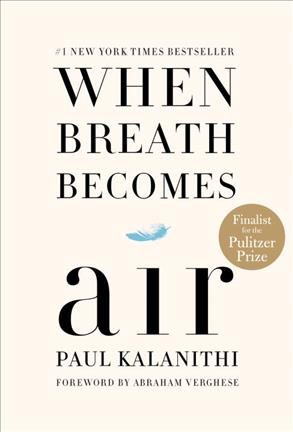
When Breath Becomes Air
Paul Kalanithi
The Year of Magical Thinking
Joan Didion
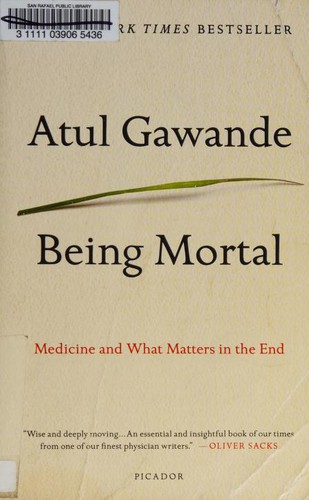
Being Mortal: Medicine and What Matters in the End
Atul Gawande
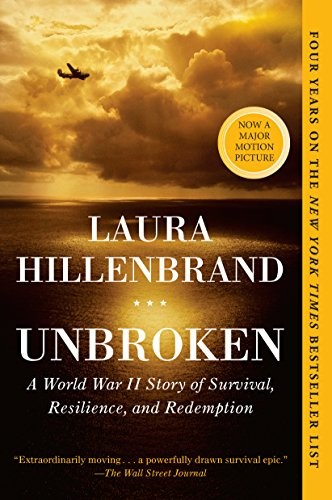
Unbroken: A World War II Story of Survival, Resilience, and Redemption
Laura Hillenbrand
