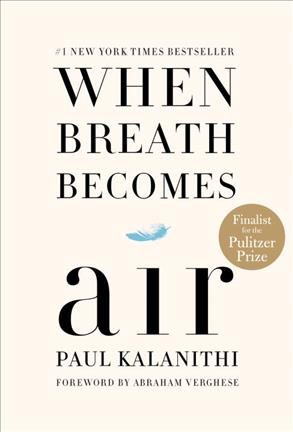
When Breath Becomes Air by Paul Kalanithi is a 2016 memoir book about mortality, medicine, meaning. A physician who has guided patients through terminal diagnoses can still be blindsided by how different the experience is from the inside. Clinical training is not the same as wisdom about one's own death.
Summary
When Breath Becomes Air is Paul Kalanithi's account of his life before and after being diagnosed with stage IV lung cancer at 36, while completing his residency in neurosurgery at Stanford. Kalanithi had spent years studying literature and biology trying to answer a single question: what makes a human life meaningful? He thought he'd spend his career finding out. The diagnosis forced a different kind of reckoning — not from the outside, as a physician trying to help patients face death, but from the inside, as a patient facing it himself.
The book is structured in two parts. The first traces Kalanithi's formation: his childhood in rural Arizona, his parallel training in English literature and human biology at Stanford, and his years as a neurosurgery resident operating on the tissue that most directly encodes identity, memory, and selfhood. He writes about the particular weight of neurosurgery — how a misjudged cut can erase a personality, how the operating room demands a kind of moral seriousness that other branches of medicine can defer. This section reads less like a memoir and more like a meditation on vocation.
The second part begins with the diagnosis and follows Kalanithi through treatment, a period of remission during which he and his wife Lucy conceived a daughter, and the eventual return of the disease. He goes back to the operating room because it's what he knows how to do and because it clarifies who he still is. His daughter Cady is born eight months before he dies. The book ends with an epilogue by Lucy. The final chapters Kalanithi wrote while on oxygen. The prose doesn't falter.
What makes the book unusual among medical memoirs is the quality of its thinking. Kalanithi is genuinely trying to work something out — how to live in the time he has, what obligations he owes his patients and his family, whether a life cut short can still be complete. He draws on Tolstoy, Beckett, and T.S. Eliot not as decoration but as interlocutors. The book doesn't offer consolation or a framework for coping with mortality. It offers honest company in the attempt to face it.
Talk to When Breath Becomes Air like its author wrote you back.
Get the ideas that fit your life — not generic summaries.
- Chat with the book
- Audiobook-style main ideas
- Adapts to your life and goals
- Helps you take action
Key takeaways
- 1.
A physician who has guided patients through terminal diagnoses can still be blindsided by how different the experience is from the inside. Clinical training is not the same as wisdom about one's own death.
- 2.
Kalanithi argues that meaning is not found after confronting mortality but through the work you were already doing. Identity survives the diagnosis if the work survives it.
- 3.
Neurosurgery makes the mind-body problem concrete and urgent. Operating on the brain is not like operating on a liver — the tissue being cut encodes language, memory, and personality.
- 4.
The question of when to treat aggressively versus when to stop is not purely medical. It requires patients and doctors to articulate what outcomes they actually value, which most people have never done.
- 5.
Kalanithi's decision to return to surgery during remission was both practical and philosophical: the operating room was the place where he understood what he was for.
- 6.
Literature prepared him for medicine in ways biology alone could not. Both fields are, at bottom, concerned with the same question: what does a human life mean?
- 7.
The epilogue by Lucy Kalanithi is not a coda but a different kind of witness — a partner's account of the same period that makes the book a conversation rather than a monologue.
- 8.
A life cut short is not necessarily incomplete. Kalanithi came to see Cady's birth and his writing of the book as a different kind of completion than a long career would have been.
Discussion questions
Use these on your own, with a book club, or as chat starters in Superbook. Book club version, ready to copy or print →
- 1.
Kalanithi trained in both literature and medicine because he believed they were asking the same question. Do you think that's true? What does each field offer that the other can't?
- 2.
He describes the experience of becoming a patient after years as a physician. Where in your own life has switching roles — from expert to novice, from caregiver to recipient — changed what you understood?
- 3.
What does Kalanithi mean when he says he wanted his life to be about meaning rather than happiness? Is that a distinction that makes sense to you?
- 4.
He chose to return to surgery during remission despite his prognosis. How do you think about the balance between extending life and living on your own terms inside a shortened one?
- 5.
The book offers no clear answer to the question of what makes a life complete. Did reading it give you a working answer, even a provisional one?
- 6.
Lucy's epilogue describes the same period from outside. What did her account add that Paul's could not? Have you ever read a parallel account of a shared experience and been surprised by the gap?
- 7.
Kalanithi writes about the moral weight of neurosurgery — that the stakes are different from other medicine. What work do you do, or have you witnessed, where the ethical stakes are similarly irreducible?
- 8.
He uses T.S. Eliot, Tolstoy, and Beckett as genuine guides rather than as literary ornament. Is there a book or work that has actually functioned that way for you in a serious moment?
- 9.
The book ends before he has resolved the questions he set out to answer. Does that feel like a failure of the project, or is the incompleteness part of the point?
- 10.
Kalanithi's daughter Cady is born knowing she will not remember her father. He wrote partly for her. If you were writing something for someone who wouldn't read it for twenty years, what would you most want them to understand?
- 11.
How does the book's discussion of mortality compare to how mortality is usually talked about — in medicine, in family, in culture? What does it get right that most accounts get wrong?
- 12.
After reading it, did you think differently about what you want from your own doctors — the information they give, the way they speak about prognosis, what they leave unsaid?
Themes
Frequently asked questions
-
What is When Breath Becomes Air about?
It is a memoir by neurosurgeon Paul Kalanithi about being diagnosed with terminal lung cancer at 36 while finishing his residency. The book is less about dying than about the questions his impending death forced him to face: what makes a life meaningful, what obligations we owe one another, and whether a career cut short can still constitute a complete life.
-
Is When Breath Becomes Air worth reading?
Yes, though it is not an easy book. Its strength is the quality of thinking Kalanithi brings to an impossible situation. It avoids the uplift and resolution that many illness memoirs reach for. If you want honest company in thinking about mortality and vocation, it is one of the best books available.
-
How long does it take to read When Breath Becomes Air?
Around four to five hours for the 228-page book at average reading pace. Many readers report finishing it in a single sitting. The writing is dense in places but propulsive; the chapters are short and the epilogue is brief.
-
Who should read When Breath Becomes Air?
Anyone who works in medicine, cares for someone seriously ill, or is thinking seriously about mortality and meaning. It is also valuable for readers who came to it through the science-and-humanities crossover — Kalanithi's treatment of literature and biology as parallel disciplines is rare and carefully done.
-
What is the most memorable part of the book?
Many readers cite the final pages, written while Kalanithi was on oxygen and addressed directly to his daughter Cady. The prose remains precise and unsentimentalized to the end, which makes it more affecting than any more overtly emotional passage could be.
Similar books
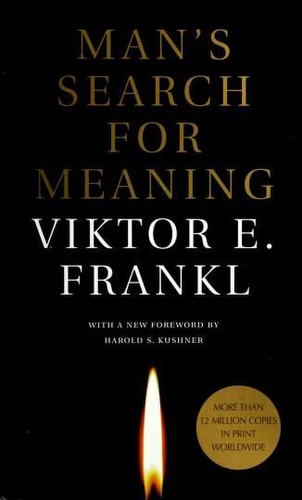
Man's Search for Meaning
Viktor E. Frankl
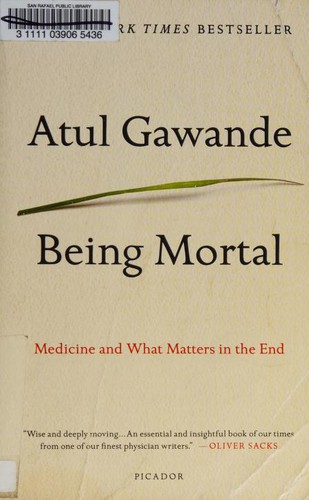
Being Mortal: Medicine and What Matters in the End
Atul Gawande
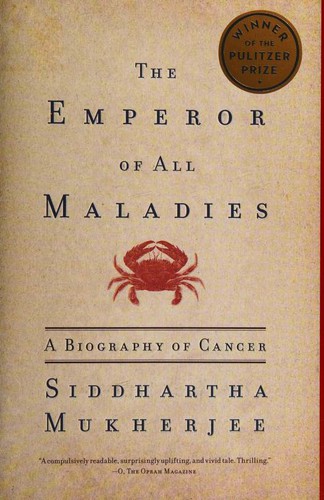
The Emperor of All Maladies: A Biography of Cancer
Siddhartha Mukherjee
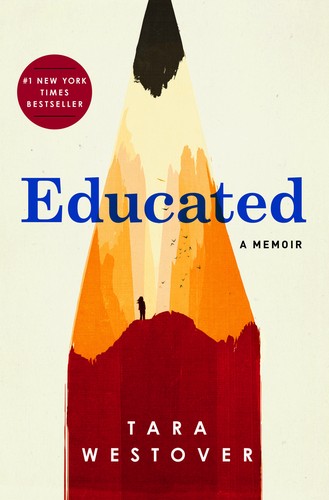
Educated: A Memoir
Tara Westover
