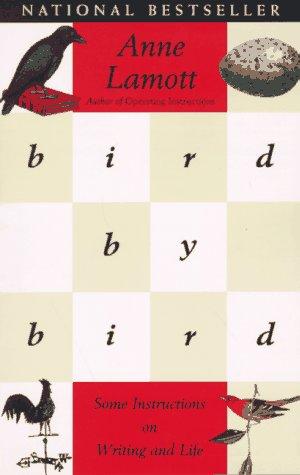
Talk to Bird by Bird like its author wrote you back.
Get the ideas that fit your life — not generic summaries.
- Chat with the book
- Audiobook-style main ideas
- Adapts to your life and goals
- Helps you take action
Bird by Bird, in detail
Bird by Bird is Anne Lamott's guide to writing and the creative life, grown from a course she taught at UC Davis and developed over years of writing novels, essays, and journalism. The title comes from an episode she describes: her brother, overwhelmed by a school report on birds due the next day, was told by their father to go "bird by bird." It became Lamott's metaphor for the only approach to any creative project: one small, concrete piece at a time.
The book's most celebrated section is the chapter on shitty first drafts — Lamott's insistence that all good writers have them and that the willingness to write badly at first is not a failure condition but a prerequisite. The first draft is not the work; it is the raw material from which the work is made. Perfectionism — the refusal to produce a shitty draft — is the primary obstacle to writing anything at all.
Lamott covers character, plot, dialogue, voice, and scene-writing from the practical perspective of a working novelist. But the book's most enduring contribution is its psychological honesty: she describes the voices of self-doubt (KFKD radio — the station that broadcasts your worst fears and most inflated self-assessments simultaneously), the feeling of impostor syndrome, the relationship between writers and envy, and the importance of paying close attention to the world as the fundamental skill underlying all writing.
The advice is not limited to fiction. The principles of getting started, managing perfectionism, writing badly before writing well, and attending carefully to concrete details apply to any creative work. Lamott's voice is warm, funny, and self-deprecating in a way that makes the difficult advice easier to receive.
The big ideas
- 1.
Shitty first drafts are not a failure condition — they are the first stage of the writing process. All writers have them; most just don't talk about it. Giving yourself permission to write badly is the prerequisite for writing at all.
- 2.
Bird by bird: the only way through any large creative project is one small, manageable piece at a time. Trying to see the whole at once produces paralysis.
- 3.
Perfectionism is the enemy of completion. It is not high standards — it is the refusal to start or finish because the work might be imperfect.
