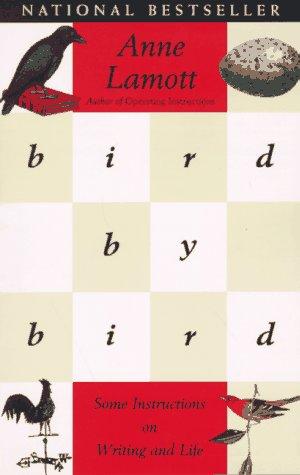
Bird by Bird by Anne Lamott is a 1994 self-help book about writing, creativity, perfectionism. Shitty first drafts are not a failure condition — they are the first stage of the writing process. All writers have them; most just don't talk about it. Giving yourself permission to write badly is the prerequisite for writing at all.
Summary
Bird by Bird is Anne Lamott's guide to writing and the creative life, grown from a course she taught at UC Davis and developed over years of writing novels, essays, and journalism. The title comes from an episode she describes: her brother, overwhelmed by a school report on birds due the next day, was told by their father to go "bird by bird." It became Lamott's metaphor for the only approach to any creative project: one small, concrete piece at a time.
The book's most celebrated section is the chapter on shitty first drafts — Lamott's insistence that all good writers have them and that the willingness to write badly at first is not a failure condition but a prerequisite. The first draft is not the work; it is the raw material from which the work is made. Perfectionism — the refusal to produce a shitty draft — is the primary obstacle to writing anything at all.
Lamott covers character, plot, dialogue, voice, and scene-writing from the practical perspective of a working novelist. But the book's most enduring contribution is its psychological honesty: she describes the voices of self-doubt (KFKD radio — the station that broadcasts your worst fears and most inflated self-assessments simultaneously), the feeling of impostor syndrome, the relationship between writers and envy, and the importance of paying close attention to the world as the fundamental skill underlying all writing.
The advice is not limited to fiction. The principles of getting started, managing perfectionism, writing badly before writing well, and attending carefully to concrete details apply to any creative work. Lamott's voice is warm, funny, and self-deprecating in a way that makes the difficult advice easier to receive.
Talk to Bird by Bird like its author wrote you back.
Get the ideas that fit your life — not generic summaries.
- Chat with the book
- Audiobook-style main ideas
- Adapts to your life and goals
- Helps you take action
Key takeaways
- 1.
Shitty first drafts are not a failure condition — they are the first stage of the writing process. All writers have them; most just don't talk about it. Giving yourself permission to write badly is the prerequisite for writing at all.
- 2.
Bird by bird: the only way through any large creative project is one small, manageable piece at a time. Trying to see the whole at once produces paralysis.
- 3.
Perfectionism is the enemy of completion. It is not high standards — it is the refusal to start or finish because the work might be imperfect.
- 4.
Paying close attention — to people, to detail, to the texture of experience — is the fundamental creative skill. It cannot be faked, and it cannot be learned without practice.
- 5.
KFKD radio — the internal broadcast of self-doubt and grandiosity — runs constantly for most writers. Learning to ignore it rather than silence it is the more achievable goal.
- 6.
Envy is a reliable indicator of what you want to be doing. If someone else's success stings in a specific way, that's information about your own desires.
- 7.
Character is primary. The most reliable path into a piece of writing is through a specific character doing a specific thing.
- 8.
The people who succeed as writers are the ones who keep showing up — not necessarily the most talented but the most persistent. The work is done in the daily return.
Discussion questions
Use these on your own, with a book club, or as chat starters in Superbook. Book club version, ready to copy or print →
- 1.
Lamott's shitty first drafts idea is liberating for many writers and anxiety-inducing for others. What is your relationship with bad early drafts? Do you allow them?
- 2.
When have you applied the bird-by-bird principle successfully to a large project — breaking it down to a size you could actually work on? What made that possible?
- 3.
What does your KFKD radio play? What are the specific voices of self-doubt that most reliably accompany your creative work?
- 4.
Perfectionism as fear: in what area of your creative or professional life are you using perfectionism to avoid finishing something?
- 5.
Lamott says close attention is the fundamental skill. How good is your attention? What did you actually notice today that you might have missed in a less attentive state?
- 6.
She covers envy as information about desire. What is a recent instance of creative or professional envy you felt? What does it tell you about what you want?
- 7.
Lamott writes about the importance of starting: even if you can't see the whole, you can write one true sentence. What is the one true sentence you could write today about the project you're most avoiding?
- 8.
The book talks about writing groups as support structures. What kind of community currently supports your creative or professional work? What kind of community would most serve it?
- 9.
How much of your creative output is blocked by the belief that the first version needs to be good? What would your output look like if you removed that requirement?
- 10.
Lamott writes honestly about the writing life's disappointments — publication doesn't fix everything, success doesn't eliminate self-doubt. Does that make the prospect of creative work more honest or more discouraging for you?
- 11.
She says writers succeed by showing up. What does showing up look like for your most important work — not the heroic days, but the ordinary ones?
- 12.
Bird by Bird is about writing but it uses the writing life as a lens on a larger question: how do you do meaningful work without being crushed by the gap between aspiration and ability? What does that question mean for your own work?
Themes
Frequently asked questions
-
Is Bird by Bird worth reading if you're not a fiction writer?
Yes. Although Lamott frames most advice through the lens of fiction writing, the underlying principles — starting before you feel ready, writing badly before writing well, paying close attention — apply to any creative or written work. Many readers apply the book's principles to nonfiction, journalism, and business writing.
-
How long does it take to read Bird by Bird?
About four hours. The book is organized in well-defined sections — short assignments, characters, plot, publication — and can be read straight through or consulted by section.
-
What is the main idea of Bird by Bird?
Writing is done bird by bird — one small, concrete piece at a time — and the first draft is supposed to be terrible. Perfectionism is the enemy of getting anything done, and the willingness to write badly is the prerequisite for eventually writing well.
-
Who should read Bird by Bird?
Anyone who writes or wants to write and who struggles with getting started, finishing, or being satisfied with early drafts. Also useful for anyone who does any kind of creative work and relates to the perfectionism and self-doubt Lamott describes.
-
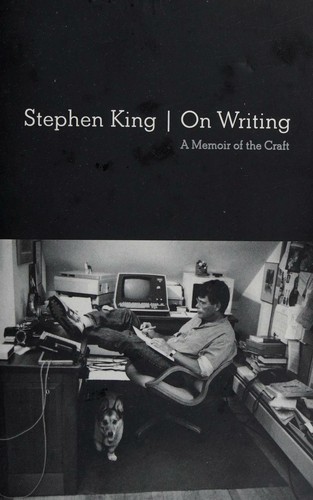
How does Bird by Bird compare to On Writing by Stephen King?
Both are about the craft of writing and both are heavily autobiographical. King's book is more structured around specific technical advice and more focused on fiction. Lamott's is warmer, funnier, and more focused on the psychological experience of the writer. They address complementary dimensions.