Classics · Book club
Bleak House book club questions
Here are 12 book club questions for Bleak House by Charles Dickens, ordered to open easily and end somewhere worth arguing about. Copy them, print them, or bring them up one at a time.
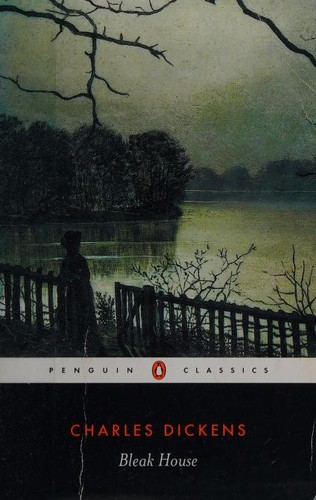
Bleak House is organized around the interminable Chancery case of Jarndyce and Jarndyce — a legal dispute over a will that has been grinding through the Court of Chancery for decades, consuming the fortunes and lives of everyone attached to it.
Charles Dickens · 1853 · 24h 0m
Full summary and key takeaways →The 12 questions
- 1.
Jarndyce and Jarndyce has been going on for decades before the novel opens. At what point does participation in a corrupt system become complicity? When does Dickens judge his characters on this?
- 2.
Esther narrates with such relentless modesty that many readers find her irritating. Is that a flaw in the characterization or is Dickens doing something deliberate with her self-deprecation?
- 3.
Mrs. Jellyby's reform work is satirized, but Dickens himself was a public advocate for social causes. Is the novel's critique of her consistent with his biography?
- 4.
Bleak House was written partly as a polemic against Chancery. Is it still politically effective, or has the specific target made it a period piece?
- 5.
The double narration creates two versions of the same world. Which narrator do you trust more? Do you think Dickens intended one to be more reliable?
- 6.
Lady Dedlock's secret drives much of the plot. Does the novel judge her for what she did or for the cover-up?
- 7.
Inspector Bucket is both a moral agent and an enforcer of a class-bound legal system. Can both things be true at once in the novel?
- 8.
Jo is the novel's most helpless figure — illiterate, homeless, unwanted. Does Dickens render him with dignity or use him as a prop for pathos?
- 9.
The novel ends with Esther settled and content. Is that resolution earned or convenient? Does it resolve the problems the novel raised?
- 10.
The legal system in Bleak House consumes everything. Can you think of a contemporary equivalent — an institution that works the same way?
- 11.
Dickens uses spontaneous combustion as a plot device and was criticized for it. Does it matter that it's scientifically implausible? What does it do that a realistic death wouldn't?
- 12.
The novel has too many characters for most first-time readers to track comfortably. Does that abundance of character serve the book's argument about Victorian society?
How to run the discussion
- Pick six to eight, not all of them. An hour of real discussion covers fewer questions than anyone expects, and racing the list is what makes a book club feel like homework.
- Open with what people noticed, not what they concluded. Asking for a verdict first hardens opinions before anyone has heard each other.
- Let the disagreement run. The questions below that split a room are the ones worth the time; the ones everyone answers the same way can be skipped.
- Ask the quiet person a specific question. A direct, narrow question is far easier to answer than an open invitation to contribute.
Themes worth steering toward
If the conversation stalls, these are the threads that usually restart it.
Common questions
What are good book club questions for Bleak House?
Here are 12 book club questions for Bleak House by Charles Dickens, ordered to open easily and end somewhere worth arguing about. The strongest openers ask what each reader noticed rather than what they concluded, and the discussion usually turns on justice and the law's failure, institutional rot, identity and secrets.
How long should a book club discussion of Bleak House last?
Most groups run 60 to 90 minutes of actual discussion. That is roughly six to eight questions, not all of them, so pick the ones that suit your group rather than working down the list in order.
What are the main themes in Bleak House?
Justice and the law's failure, Institutional rot, Identity and secrets, Responsibility and neglect, Social connection across class. Those are the threads most likely to divide a room, which makes them the useful places to steer a discussion that has gone quiet.
Picking the next one? See books like Bleak House or questions for other book club picks.
