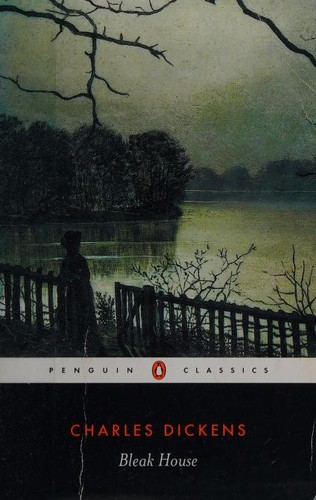
Talk to Bleak House like its author wrote you back.
Get the ideas that fit your life — not generic summaries.
- Chat with the book
- Audiobook-style main ideas
- Adapts to your life and goals
- Helps you take action
What it argues
Bleak House is organized around the interminable Chancery case of Jarndyce and Jarndyce — a legal dispute over a will that has been grinding through the Court of Chancery for decades, consuming the fortunes and lives of everyone attached to it. Into this orbit arrives Esther Summerson, an illegitimate young woman with an obscured past, who comes to live with the kindly John Jarndyce alongside two other wards of the court. The lawsuit is the novel's spine, but Dickens uses it as a lens through which to examine the entire Victorian social organism — its slums, its philanthropy, its drawing rooms, its detective work, its legal corruption.
The novel's subject is the way institutions destroy the people they claim to serve. The Chancery suit has made professional parasites of the lawyers who feed on it, driven one claimant mad, and killed at least one through hope deferred. But Dickens is also precise about specific human failures: Mrs. Jellyby prosecutes her "telescopic philanthropy" in Africa while her own children fall through broken banisters; the landlord Krook is illiterate while hoarding the legal documents that might resolve the whole case; Sir Leicester Dedlock presides over his ancestral estate with dignified obsolescence while his wife carries a secret that will destroy them both. Every thread in the novel is about the cost of not seeing what is directly in front of you.
What it gets right
- 1.
The Court of Chancery is Dickens's symbol for any institution that exists primarily to perpetuate itself, feeding on the people who depend on it rather than serving them.
- 2.
The novel's double narrative — Esther's warm first person and the cold omniscient present tense — is not a gimmick but an argument: the same world looks entirely different depending on where you stand in it.
- 3.
Mrs. Jellyby's telescopic philanthropy (caring about distant Africa while ignoring her suffering children) is Dickens's diagnosis of a persistent failure mode in reform movements.
What it covers
Who wrote it
Charles Dickens (1812–1870) was an English novelist whose serialized fiction shaped the Victorian era's understanding of itself. Born into poverty and forced to work in a blacking factory as a boy after his father was imprisoned for debt, Dickens drew on that experience throughout his career. His major novels include Great Expectations, Oliver Twist, David Copperfield, A Tale of Two Cities, and Dombey and Son. He was also a tireless public reader and campaigner on social issues. Bleak House, published in serial form from 1852 to 1853, is often considered his masterpiece.
