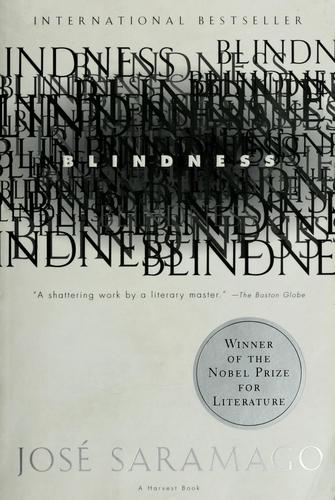
Talk to Blindness like its author wrote you back.
Get the ideas that fit your life — not generic summaries.
- Chat with the book
- Audiobook-style main ideas
- Adapts to your life and goals
- Helps you take action
What it argues
An epidemic of white blindness — contagious, sudden, unexplained — sweeps through an unnamed city. The government quarantines the blind in an abandoned mental asylum, leaving them without adequate food, sanitation, or oversight. What follows is a systematic account of how quickly human social organization collapses when a catastrophic disruption removes the infrastructure that ordinary decency depends on — and how quickly a small group of people can become predators when they have power and others have nothing.
One woman has not gone blind. She pretends she has, in order to stay with her husband, and she watches everything. She is never named — no character in the novel is named; they are "the doctor's wife," "the first blind man," "the girl with dark glasses." Saramago uses this deliberately to strip away the markers of individual identity and keep the focus on behavior: what people do when no one is watching, when survival is immediate, when shame is a luxury. The woman who can see is not simply a hero. She is someone who makes choices under conditions most people will never face, and Saramago is careful about the moral weight of those choices.
What it gets right
- 1.
The namelessness of all characters is not an affectation. It removes the comfortable distance of watching specific people fail and forces you to watch human behavior as such.
- 2.
Saramago's punctuation-free, run-on prose is formally motivated — it mimics the disorientation of blindness, and once you adapt to it, ordinary punctuated prose feels strangely clinical by comparison.
- 3.
The ward that organizes itself around power and violence is not presented as exceptional. Saramago treats it as a predictable outcome of removing accountability.
What it covers
Who wrote it
José Saramago (1922–2010) was a Portuguese novelist, playwright, and Nobel laureate. Born into a poor rural family, he worked as a metalworker, translator, and journalist before publishing his breakthrough novel Baltasar and Blimunda in 1982. His other major works include The Gospel According to Jesus Christ, The Stone Raft, All the Names, and The Cave. He won the Nobel Prize in Literature in 1998. His Communist Party membership and his novel about Christ caused a prolonged conflict with the Portuguese government. He spent his final years in the Canary Islands.
