Blitzscaling: The Lightning-Fast Path to Building Massively Valuable Companies by Reid Hoffman and Chris Yeh is a 2018 business book about startups, growth, strategy. Blitzscaling is the conscious decision to prioritize speed over efficiency in the face of uncertainty because the cost of being too slow exceeds the cost of moving fast and wrong.
Summary
Blitzscaling is Reid Hoffman's argument that certain markets — primarily those with strong network effects and winner-take-most dynamics — reward companies that prioritize speed of growth over efficiency, even at the cost of significant operational risk. The term combines "blitz" (the German word for lightning) with "scaling," and Hoffman is explicit that the strategy is only rational in specific conditions: when the market is large enough to justify the investment, when network effects create durable competitive advantages for whoever scales first, and when capital is available to fund the losses that fast growth requires.
Hoffman identifies five stages of company scale — Family (1-9 people), Tribe (10-99), Village (100-999), City (1,000-9,999), and Nation (10,000+) — and argues that most management practices that work at one stage actively harm you at the next. The book's most useful contribution is its taxonomy of growth limiters and accelerators: network effects, market size, distribution, gross margins, and product-market fit are the accelerators; lack of product-market fit, operational complexity, and management bandwidth are the limiters.
The counterintuitive prescriptions are the book's core: accept chaos and technical debt rather than over-engineering early, hire people who are slightly ahead of your scale so you always have someone who has done it before, and be willing to do things that don't scale to learn what does. Hoffman also explains why blitzscaling is not always the right strategy — companies in markets without winner-take-most dynamics that blitzscale typically burn cash without building durable advantages.
The book draws heavily on Silicon Valley case studies — Airbnb, LinkedIn, Uber, PayPal, Google — which makes it vivid and specific but also limits how much it generalizes. Founders outside of venture-backed tech startups will find the framework illuminating but often inapplicable. The honest caveat: blitzscaling is a specific strategy for a specific type of market, not a universal prescription for ambitious companies.

Talk to Blitzscaling: The Lightning-Fast Path to Building Massively Valuable Companies like its author wrote you back.
Get the ideas that fit your life — not generic summaries.
- Chat with the book
- Audiobook-style main ideas
- Adapts to your life and goals
- Helps you take action
Key takeaways
- 1.
Blitzscaling is the conscious decision to prioritize speed over efficiency in the face of uncertainty because the cost of being too slow exceeds the cost of moving fast and wrong.
- 2.
The strategy is only rational when a market has winner-take-most dynamics, typically from strong network effects, and when capital is available to fund the losses of fast growth.
- 3.
Different management practices are required at each stage: Family, Tribe, Village, City, Nation. What works at 20 people actively breaks things at 200.
- 4.
Network effects — when a product becomes more valuable as more people use it — are the most powerful competitive moat in technology markets.
- 5.
The paradox of blitzscaling: you have to do things that won't scale in the early stages to discover what will scale, then invest heavily in scaling those specific things.
- 6.
Hire slightly ahead of your current scale: someone who has managed a team of 50 is better than someone who has only managed a team of 10 when you're about to hit 30.
- 7.
Accept technical debt and operational chaos in the early stages rather than over-building. The company that ships first and fixes later often beats the company that ships perfect but late.
- 8.
Blitzscaling is not universally optimal. Companies in fragmented markets without network effects that blitzscale burn cash without building lasting advantages.
Discussion questions
Use these on your own, with a book club, or as chat starters in Superbook. Book club version, ready to copy or print →
- 1.
Hoffman says blitzscaling is only rational in markets with winner-take-most dynamics. What industries or markets today have those dynamics, and which don't?
- 2.
The five stages of scale require different management approaches. Have you seen an organization struggle because it was managing at the wrong stage? What happened?
- 3.
Hoffman argues accepting operational chaos in early stages is strategic. At what point does that chaos become destructive rather than necessary?
- 4.
Network effects create durable moats, but they also make it very hard to break into established markets. What strategies let challengers overcome an incumbent's network effects?
- 5.
The book says you should hire people slightly ahead of where you are. What are the tradeoffs of that approach versus hiring people who are exactly where you are now?
- 6.
Hoffman distinguishes blitzscaling from ordinary scaling and from reckless growth. What are the specific conditions that make a strategy genuinely blitzscaling rather than just fast or just reckless?
- 7.
Many of the examples in the book — Airbnb, Uber, LinkedIn — bent or broke existing regulations during their growth phases. How do you think about that tradeoff?
- 8.
Blitzscaling requires significant venture capital. How does the framework change for companies that can't or don't want to raise external capital?
- 9.
Hoffman says the second part of blitzscaling is managing the organizational chaos that comes from rapid scale. What specific problems has rapid growth created in organizations you've seen?
- 10.
What's the difference between blitzscaling and just burning money? What would you look for to distinguish the two in a company you were evaluating?
- 11.
The book is heavily skewed toward Silicon Valley network-effects businesses. Which parts of the framework transfer to non-tech businesses, and which don't?
- 12.
If you were advising a startup in a market without network effects, what would you change about the blitzscaling framework to make it useful?
Themes
Frequently asked questions
-
Is Blitzscaling relevant outside Silicon Valley?
Partly. The growth principles and network effects analysis apply broadly, but the specific prescriptions assume access to venture capital and markets with winner-take-most dynamics. Founders in different contexts will need to adapt significantly.
-
What's the difference between blitzscaling and just growing fast?
Blitzscaling is a deliberate choice to accept known inefficiencies — higher burn rate, operational chaos, under-designed systems — in order to reach scale before competitors. It's a calculated bet, not just an aggressive growth mindset.
-
Who should read Blitzscaling?
Founders of venture-backed technology companies, investors, and anyone who wants to understand how companies like Airbnb and Uber grew so fast. Also useful for executives joining hypergrowth companies who need to understand why normal management instincts don't apply.
-
Does Blitzscaling recommend reckless growth?
No. Hoffman is explicit that blitzscaling is irrational in markets without winner-take-most dynamics. The book argues for calculated aggression in specific conditions, not growth for its own sake.
-
How does Blitzscaling compare to The Lean Startup?
They address different stages and conditions. The Lean Startup is about finding product-market fit with minimum resources. Blitzscaling is about what to do once you have product-market fit and face a winner-take-most market. They are largely complementary.
Similar books
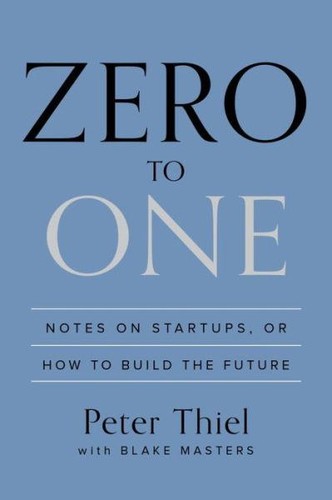
Zero to One: Notes on Startups, or How to Build the Future
Peter Thiel

The Hard Thing About Hard Things
Ben Horowitz

No Rules Rules: Netflix and the Culture of Reinvention
Reed Hastings and Erin Meyer

Venture Deals: Be Smarter Than Your Lawyer and Venture Capitalist
Brad Feld and Jason Mendelson
