Bonk: The Curious Coupling of Science and Sex by Mary Roach is a 2008 science book about human sexuality, medical research, history of science. Scientific study of human sexual response is far more recent and methodologically limited than most people assume, hampered by funding restrictions and institutional discomfort.
Summary
Bonk is Mary Roach's investigation into the science of human sexuality — not the pop psychology of relationships, but the actual research: what scientists have done inside laboratory settings to understand how sex works, what they've discovered, and why the field has been so difficult to pursue given institutional and cultural resistance. Roach approaches the subject with the same combination of scrupulous reporting and self-aware humor she brought to cadavers in Stiff, and the result is a book that manages to be simultaneously educational and genuinely funny.
The historical material is often jaw-dropping. Roach traces experiments going back to the 19th century, including surgeons grafting animal testicles onto men in the 1920s, Kinsey's meticulous but ethically contested research methods, and the extraordinary work of Masters and Johnson, who spent years observing human sexual response in a laboratory with volunteer subjects and instrumented equipment. The chapter on the history of vibrator research alone rewrites most of what popular culture claims about Victorian medicine.
The contemporary reporting visits researchers studying arousal physiology, pain and pleasure overlap, erectile dysfunction treatments, and spinal cord injury. Roach participates in some of the research herself — she and her husband agree to be subjects in an ultrasound study that images the anatomical mechanics of intercourse. These sections are written with the right balance of specificity and good humor.
What distinguishes Bonk from the many popular books that purport to be about "the science of sex" is that Roach actually talks to the scientists and reads the papers. The conclusions are more modest and more interesting than popular accounts suggest: human sexual response is idiosyncratic, context-dependent, and surprisingly poorly understood. The book takes a serious subject and makes it approachable without dumbing it down.
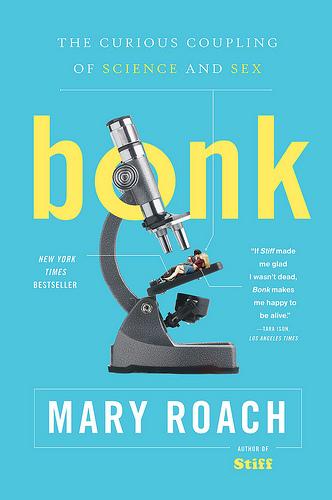
Talk to Bonk: The Curious Coupling of Science and Sex like its author wrote you back.
Get the ideas that fit your life — not generic summaries.
- Chat with the book
- Audiobook-style main ideas
- Adapts to your life and goals
- Helps you take action
Key takeaways
- 1.
Scientific study of human sexual response is far more recent and methodologically limited than most people assume, hampered by funding restrictions and institutional discomfort.
- 2.
Masters and Johnson's laboratory research in the 1950s and 60s was genuinely groundbreaking — and ethically complicated. Their methodology would not pass modern review boards.
- 3.
The anatomy of female sexual response was poorly understood for most of medical history, partly because male researchers dominated the field and partly because of cultural avoidance.
- 4.
Arousal and subjective desire often dissociate, particularly in women. Physiological response does not always align with what subjects report feeling.
- 5.
Much of what popular culture claims about Victorian attitudes toward sexuality — including the origins of vibrator therapy — is exaggerated or invented.
- 6.
Animal research on sexuality has contributed to human understanding in ways that are often poorly communicated to the public.
- 7.
Cultural and religious attitudes toward sex research have slowed funding and publication in ways that have real clinical consequences for people with sexual dysfunction.
- 8.
Pain and sexual arousal share neurological pathways in ways that explain some poorly understood clinical phenomena and have potential therapeutic applications.
Discussion questions
Use these on your own, with a book club, or as chat starters in Superbook. Book club version, ready to copy or print →
- 1.
Roach documents how difficult it has been to fund and publish sex research. What does that difficulty tell us about which scientific questions get answered and which don't?
- 2.
The book covers Masters and Johnson's research methods, which included practices that wouldn't pass ethics review today. How do you weigh scientific contribution against ethical standards of the time?
- 3.
Were there findings in the book that contradicted something you'd previously believed about human sexuality?
- 4.
Roach participates as a research subject alongside her husband. Did that choice affect how you read those sections?
- 5.
The book argues that female anatomy was poorly understood partly because male researchers controlled the field. How much do you think researcher demographics shape scientific priorities?
- 6.
Several chapters cover treatments for sexual dysfunction. How does the medicalization of sexual experience sit with you — is it appropriate, overreaching, or somewhere in between?
- 7.
The history of vibrator mythology suggests that popular culture regularly rewrites scientific history. What other areas of science do you think are similarly distorted in public understanding?
- 8.
Roach's humor is a signature of her work. Did it help you engage with material you might otherwise have skipped, or did it sometimes feel like it deflected from the seriousness of the research?
- 9.
The book covers animal research on sexuality. Where do you draw the line on what's ethically permissible in animal research for human benefit?
- 10.
What surprised you most about the history of sex research?
- 11.
Roach ends with a reflection on what science has and hasn't resolved about human sexuality. What questions does she leave you wanting answered?
Themes
Frequently asked questions
-
Is Bonk appropriate for all readers?
It is explicit in scientific terms, not in gratuitous ones. Roach describes anatomy and physiology directly. If you're comfortable reading medical nonfiction, you'll be fine. If you're easily embarrassed by frank discussion of sex, it will challenge you.
-
What is Bonk actually about?
The history and present state of scientific research into human sexual response — who did the research, how they did it, what they found, and why the field remains underfunded and culturally contested.
-
How does Bonk compare to Stiff?
Same voice and structure — rigorous research delivered with self-aware humor and genuine curiosity. Bonk is arguably more surprising because the gap between public mythology about sex science and the actual history is so large.
-
Is the science in Bonk accurate?
Yes. Roach reads the primary research and interviews working scientists. The conclusions are more cautious and more interesting than pop accounts, and she flags genuine scientific uncertainty where it exists.
-
Who should read Bonk?
Anyone curious about the actual history of sex research, medical history, or human physiology. Also anyone who has ever wondered how clinical sex research actually works and why it's so difficult to fund.
Similar books
Stiff: The Curious Lives of Human Cadavers
Mary Roach

Gulp: Adventures on the Alimentary Canal
Mary Roach

Packing for Mars: The Curious Science of Life in the Void
Mary Roach
The Body: A Guide for Occupants
Bill Bryson
