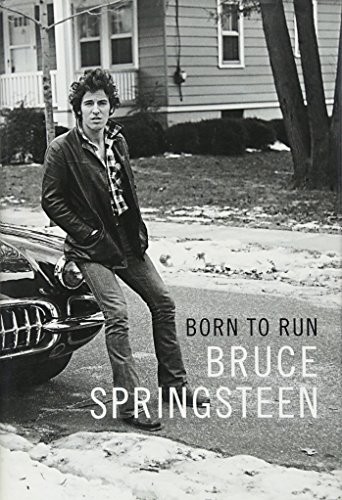
Talk to Born to Run like its author wrote you back.
Get the ideas that fit your life — not generic summaries.
- Chat with the book
- Audiobook-style main ideas
- Adapts to your life and goals
- Helps you take action
What it argues
Bruce Springsteen's Born to Run is among the most substantive rock memoirs written, in part because Springsteen is a better prose writer than his public image suggests and in part because he chose to write about the things that actually shaped him rather than the things that made him famous. The book is organized roughly chronologically, from his New Jersey childhood in the 1950s through the development of the E Street Band, the Born in the USA period, and into his late career and ongoing relationship with therapy, marriage, and his own mental health. It is notably frank about depression — the kind that doesn't manifest as obvious sadness but as numbness and disconnection — in a way that was unusual for a major male celebrity at the time of publication.
The childhood sections establish the central relationship of the book: his father Douglas, an Irish-Catholic working-class man damaged by war and economic disappointment, who alternated between silence and frightening anger, who deeply doubted his son's worth and occasionally said so. Springsteen's account of that relationship — his need for his father's approval, the impossibility of getting it in any consistent form, and the way that early wound drove his ambition — is the most psychologically detailed and honest section of the book. The observation that performers who drive themselves toward mass audiences are often people trying to feel seen by a parent who couldn't provide that is not new, but Springsteen makes it specific and personal rather than generic.
What it gets right
- 1.
The hunger that drives major performers often traces back to specific childhood wounds — parental unavailability, withhold approval — that fame can temporarily simulate but cannot actually repair.
- 2.
Springsteen's depression presented as numbness and functional disconnection rather than obvious distress, which delayed treatment for years. This is more common than the popular image of depression allows.
- 3.
The Born in the USA period — enormous commercial success, stadium tours, cultural ubiquity — was in Springsteen's account among the least satisfying of his career. He felt the songs were being heard as their opposite of what he intended.
What it covers
Who wrote it
Bruce Springsteen is an American singer-songwriter and guitarist born in Long Branch, New Jersey, in 1949. He formed the E Street Band in the early 1970s and achieved widespread recognition with the 1975 album Born to Run. His subsequent career includes eighteen studio albums and one of the most acclaimed live acts in rock history. Springsteen has won twenty Grammy Awards, an Academy Award, a Tony Award, and the Presidential Medal of Freedom. Born to Run, published in 2016, took seven years to write and became a number-one New York Times bestseller. He performed his one-man Broadway show, Springsteen on Broadway, from 2017 to 2018.
