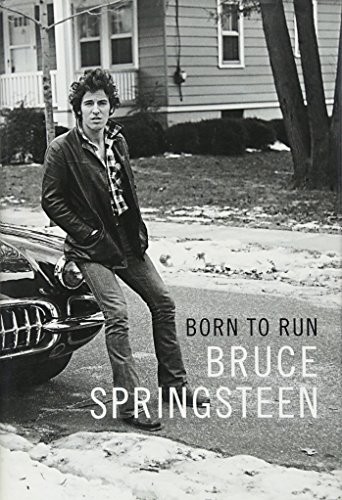
Born to Run by Bruce Springsteen is a 2016 memoir book about music, family, depression. The hunger that drives major performers often traces back to specific childhood wounds — parental unavailability, withhold approval — that fame can temporarily simulate but cannot actually repair.
Summary
Bruce Springsteen's Born to Run is among the most substantive rock memoirs written, in part because Springsteen is a better prose writer than his public image suggests and in part because he chose to write about the things that actually shaped him rather than the things that made him famous. The book is organized roughly chronologically, from his New Jersey childhood in the 1950s through the development of the E Street Band, the Born in the USA period, and into his late career and ongoing relationship with therapy, marriage, and his own mental health. It is notably frank about depression — the kind that doesn't manifest as obvious sadness but as numbness and disconnection — in a way that was unusual for a major male celebrity at the time of publication.
The childhood sections establish the central relationship of the book: his father Douglas, an Irish-Catholic working-class man damaged by war and economic disappointment, who alternated between silence and frightening anger, who deeply doubted his son's worth and occasionally said so. Springsteen's account of that relationship — his need for his father's approval, the impossibility of getting it in any consistent form, and the way that early wound drove his ambition — is the most psychologically detailed and honest section of the book. The observation that performers who drive themselves toward mass audiences are often people trying to feel seen by a parent who couldn't provide that is not new, but Springsteen makes it specific and personal rather than generic.
The music sections are strong on process. Springsteen describes the development of his specific kind of rock and roll — built from Phil Spector's wall of sound, Stax soul, Dylan's narrative ambition, and the specific sociology of the Jersey Shore bar circuit — with the care of someone who has spent decades thinking about what it consists of and why it works. His account of recording Born to Run (the album) under extreme pressure, the subsequent legal battles with his manager Mike Appel that blocked him from recording for years, and the decision to make Darkness on the Edge of Town as a rebuke to his own commercial success, are among the better accounts in rock memoir of what artistic integrity actually costs.
The final third of the book shifts register significantly. Springsteen writes about marrying Patti Scialfa, raising children, entering therapy in his late thirties, experiencing a severe depressive episode in his fifties that required medication to resolve, and his complicated lifelong relationship with his father that changed slowly over decades and resolved, imperfectly, only near Douglas's death. These sections are less entertaining than the rock and roll chapters but are in some ways more important: they are an account of how a person with Springsteen's particular formation — the drive, the hunger, the emotional unavailability that fame encouraged — learns, late and partially, to receive the love he spent his life performing to strangers.
Talk to Born to Run like its author wrote you back.
Get the ideas that fit your life — not generic summaries.
- Chat with the book
- Audiobook-style main ideas
- Adapts to your life and goals
- Helps you take action
Key takeaways
- 1.
The hunger that drives major performers often traces back to specific childhood wounds — parental unavailability, withhold approval — that fame can temporarily simulate but cannot actually repair.
- 2.
Springsteen's depression presented as numbness and functional disconnection rather than obvious distress, which delayed treatment for years. This is more common than the popular image of depression allows.
- 3.
The Born in the USA period — enormous commercial success, stadium tours, cultural ubiquity — was in Springsteen's account among the least satisfying of his career. He felt the songs were being heard as their opposite of what he intended.
- 4.
Long-term therapy changed Springsteen's relationship with his father, his wife, and his own sense of what he was doing on stage — though it came decades later than it might have.
- 5.
Musical identity is partly chosen and partly received. Springsteen's specific mix of influences was deliberate; the emotional need that the performance of those influences served was not.
- 6.
The legal fight with manager Mike Appel over the Born in the USA recording rights consumed two years and cost Springsteen the momentum he had built with Born to Run. Protecting creative work requires understanding contracts before you sign them.
- 7.
The E Street Band's chemistry was not accidental. Springsteen describes the specific roles each musician played — emotional as well as musical — and the work required to maintain a collective over decades.
- 8.
Springsteen describes the nightly ritual of performance as both compulsive and necessary: a way of temporarily filling a space that nothing else reliably fills. He is clear that this is a problem, not only a gift.
- 9.
His relationship with Patti Scialfa worked, he argues, partly because she is a musician who understood the life and partly because she refused to accept the emotional unavailability he had normalized with others.
Discussion questions
Use these on your own, with a book club, or as chat starters in Superbook. Book club version, ready to copy or print →
- 1.
Springsteen traces his ambition directly to his father's withholding. How much of what drives you comes from a wound, and how much from something that feels more cleanly chosen?
- 2.
He describes the Born in the USA period as creatively dissatisfying despite its commercial peak. Is there an analogue in your experience of succeeding at something that felt hollow once you had it?
- 3.
Springsteen didn't enter therapy until his late thirties and didn't find medication that helped until his fifties. What does that delay suggest about the cultural barriers to male mental health treatment?
- 4.
The book describes performance as filling a need that it can never fully satisfy. What does that observation suggest about the relationship between creative ambition and wellbeing?
- 5.
He is honest that fame and wealth did not resolve his problems. That honesty is common in retrospective accounts but rare in the moment. Why do you think people find it so difficult to acknowledge during success?
- 6.
Springsteen's account of his father is generous toward someone who, by his own account, caused real damage. How does he manage that balance, and does it feel authentic or defensive?
- 7.
The E Street Band has been together, with interruptions, for over fifty years. What does the book suggest are the conditions for a creative collaboration to survive that long?
- 8.
Born to Run the memoir is consciously written — Springsteen worked on it for seven years. Does that literary investment make you trust it more or less as a candid account?
- 9.
He describes learning to be present in his marriage and with his children as harder than anything he had done on stage. What accounts for that difficulty?
- 10.
The book is a bestseller, which means it succeeded commercially as a cultural product while describing the costs of commercial success. Is there a contradiction there?
- 11.
If you could ask Springsteen one question that the book doesn't answer, what would it be?
- 12.
Which section of the book — the childhood, the rock and roll years, or the late personal material — did you find most valuable, and why?
Themes
Frequently asked questions
-
Is Born to Run by Bruce Springsteen worth reading?
Yes, especially if you're interested in the psychology of performance, the specific history of American rock in the 1970s and 1980s, or honest accounts of depression and therapy. It's longer and more literary than most rock memoirs, and the personal material in the final third is more substantive than the standard celebrity reflection.
-
How long does Born to Run take to read?
Around 500 pages; allow ten to twelve hours. Springsteen's prose is careful and rhythmic — he took seven years to write the book — and it rewards slow reading more than most music memoirs.
-
What is Born to Run mainly about?
It's primarily about the formation of Bruce Springsteen as a performer and person — specifically the relationship between his father's emotional withholding, his driven ambition, and his decades-long effort to understand the connection between those two things. The rock history is real, but the psychological narrative is the book's center.
-
Is Born to Run honest about depression?
Yes, more so than most celebrity accounts. Springsteen describes a severe depressive episode in his fifties, the challenge of finding medication that worked, and the ongoing role of therapy in his life. He is specific about symptoms and treatment in a way that has made the book useful to readers struggling with similar issues.
-
How does Born to Run compare to other rock memoirs?
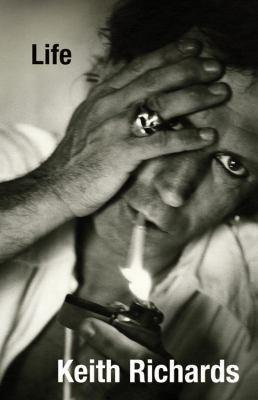
It's longer, more literary, and more psychologically focused than most. Richards's Life is better on music craft; Dylan's Chronicles is stranger and more evasive; Springsteen's book is the most personally transparent of the three. It belongs in a different category than the standard rock star memoir.