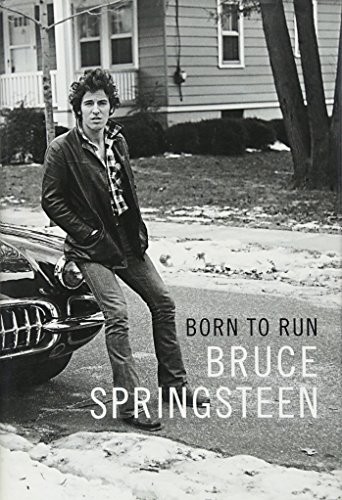
Talk to Born to Run like its author wrote you back.
Get the ideas that fit your life — not generic summaries.
- Chat with the book
- Audiobook-style main ideas
- Adapts to your life and goals
- Helps you take action
Born to Run, in detail
Bruce Springsteen's Born to Run is among the most substantive rock memoirs written, in part because Springsteen is a better prose writer than his public image suggests and in part because he chose to write about the things that actually shaped him rather than the things that made him famous. The book is organized roughly chronologically, from his New Jersey childhood in the 1950s through the development of the E Street Band, the Born in the USA period, and into his late career and ongoing relationship with therapy, marriage, and his own mental health. It is notably frank about depression — the kind that doesn't manifest as obvious sadness but as numbness and disconnection — in a way that was unusual for a major male celebrity at the time of publication.
The childhood sections establish the central relationship of the book: his father Douglas, an Irish-Catholic working-class man damaged by war and economic disappointment, who alternated between silence and frightening anger, who deeply doubted his son's worth and occasionally said so. Springsteen's account of that relationship — his need for his father's approval, the impossibility of getting it in any consistent form, and the way that early wound drove his ambition — is the most psychologically detailed and honest section of the book. The observation that performers who drive themselves toward mass audiences are often people trying to feel seen by a parent who couldn't provide that is not new, but Springsteen makes it specific and personal rather than generic.
The music sections are strong on process. Springsteen describes the development of his specific kind of rock and roll — built from Phil Spector's wall of sound, Stax soul, Dylan's narrative ambition, and the specific sociology of the Jersey Shore bar circuit — with the care of someone who has spent decades thinking about what it consists of and why it works. His account of recording Born to Run (the album) under extreme pressure, the subsequent legal battles with his manager Mike Appel that blocked him from recording for years, and the decision to make Darkness on the Edge of Town as a rebuke to his own commercial success, are among the better accounts in rock memoir of what artistic integrity actually costs.
The final third of the book shifts register significantly. Springsteen writes about marrying Patti Scialfa, raising children, entering therapy in his late thirties, experiencing a severe depressive episode in his fifties that required medication to resolve, and his complicated lifelong relationship with his father that changed slowly over decades and resolved, imperfectly, only near Douglas's death. These sections are less entertaining than the rock and roll chapters but are in some ways more important: they are an account of how a person with Springsteen's particular formation — the drive, the hunger, the emotional unavailability that fame encouraged — learns, late and partially, to receive the love he spent his life performing to strangers.
The big ideas
- 1.
The hunger that drives major performers often traces back to specific childhood wounds — parental unavailability, withhold approval — that fame can temporarily simulate but cannot actually repair.
- 2.
Springsteen's depression presented as numbness and functional disconnection rather than obvious distress, which delayed treatment for years. This is more common than the popular image of depression allows.
- 3.
The Born in the USA period — enormous commercial success, stadium tours, cultural ubiquity — was in Springsteen's account among the least satisfying of his career. He felt the songs were being heard as their opposite of what he intended.
