Talk to Brotopia like its author wrote you back.
Get the ideas that fit your life — not generic summaries.
- Chat with the book
- Audiobook-style main ideas
- Adapts to your life and goals
- Helps you take action
Brotopia, in detail
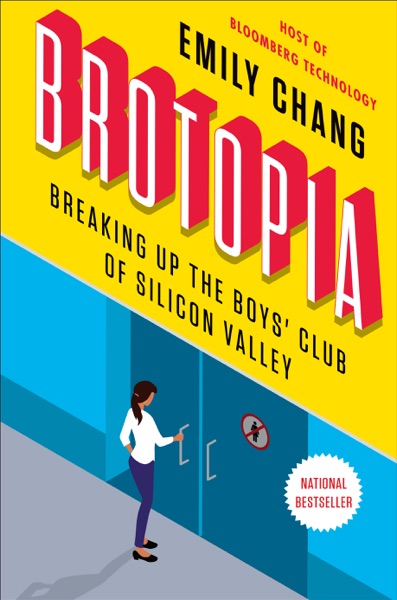
Brotopia is Emily Chang's investigation into how Silicon Valley became dominated by men and why it has stayed that way despite decades of stated commitment to diversity. Chang, the host of Bloomberg Technology, spent years interviewing hundreds of people — founders, investors, engineers, and the women who've tried to build careers among them — to document the structural and cultural forces that lock women out.
The book's historical argument is counterintuitive: programming was not always a male profession. In the early decades of computing, women were well represented in software engineering. A shift happened in the 1960s and 1970s when tech companies began using personality tests to screen job candidates. Those tests, designed by psychologists who studied existing male engineers, defined the "ideal programmer" as antisocial and uninterested in people — traits that happened to match the men already in the field. The tests systematically excluded women and created a self-reinforcing feedback loop that defined coding as male work.
Chang's contemporary reporting covers venture capital, the startup world, and what she calls the "bro culture" of social exclusion — the parties, networks, and informal rituals through which access and capital flow among men. She profiles women who've spoken out about harassment (including high-profile cases involving investors and CEOs) and examines the pattern of legal settlements, non-disclosure agreements, and reputational attacks that follow. The book names names in ways that made headlines when it was published.
The final section is more prescriptive. Chang identifies what she considers the conditions for change: diversity at the venture capital level, mentorship without the strings that typically come with it in male-dominated networks, and a culture shift away from the idea that technical "meritocracy" justifies exclusion. The tone throughout is measured rather than polemical. Chang is careful to distinguish systemic problems from individual bad actors, and the book benefits from that restraint. For anyone trying to understand why diversity initiatives in tech so often fail, this is the more useful work.
The big ideas
- 1.
Programming was not historically a male profession — women were well represented in early computing. The male dominance of tech was constructed, not natural.
- 2.
Biased personality tests in the 1960s defined 'ideal programmer' traits that matched existing male employees, systematically filtering out women for decades.
- 3.
Venture capital remains overwhelmingly male, and the informal networks through which deals get made reinforce exclusion even when formal policies aim at inclusion.
