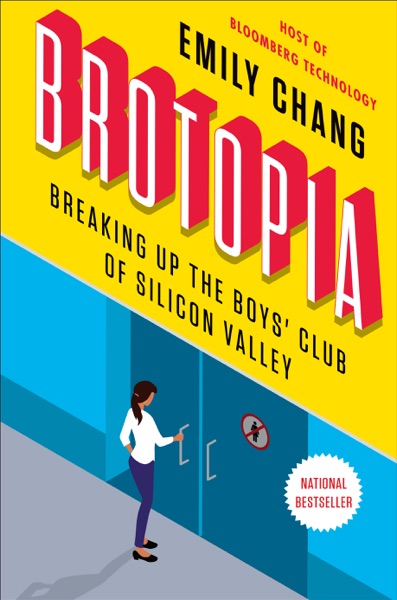
Brotopia by Emily Chang is a 2018 business book about gender inequality, silicon valley culture, tech industry. Programming was not historically a male profession — women were well represented in early computing. The male dominance of tech was constructed, not natural.
Summary
Brotopia is Emily Chang's investigation into how Silicon Valley became dominated by men and why it has stayed that way despite decades of stated commitment to diversity. Chang, the host of Bloomberg Technology, spent years interviewing hundreds of people — founders, investors, engineers, and the women who've tried to build careers among them — to document the structural and cultural forces that lock women out.
The book's historical argument is counterintuitive: programming was not always a male profession. In the early decades of computing, women were well represented in software engineering. A shift happened in the 1960s and 1970s when tech companies began using personality tests to screen job candidates. Those tests, designed by psychologists who studied existing male engineers, defined the "ideal programmer" as antisocial and uninterested in people — traits that happened to match the men already in the field. The tests systematically excluded women and created a self-reinforcing feedback loop that defined coding as male work.
Chang's contemporary reporting covers venture capital, the startup world, and what she calls the "bro culture" of social exclusion — the parties, networks, and informal rituals through which access and capital flow among men. She profiles women who've spoken out about harassment (including high-profile cases involving investors and CEOs) and examines the pattern of legal settlements, non-disclosure agreements, and reputational attacks that follow. The book names names in ways that made headlines when it was published.
The final section is more prescriptive. Chang identifies what she considers the conditions for change: diversity at the venture capital level, mentorship without the strings that typically come with it in male-dominated networks, and a culture shift away from the idea that technical "meritocracy" justifies exclusion. The tone throughout is measured rather than polemical. Chang is careful to distinguish systemic problems from individual bad actors, and the book benefits from that restraint. For anyone trying to understand why diversity initiatives in tech so often fail, this is the more useful work.
Talk to Brotopia like its author wrote you back.
Get the ideas that fit your life — not generic summaries.
- Chat with the book
- Audiobook-style main ideas
- Adapts to your life and goals
- Helps you take action
Key takeaways
- 1.
Programming was not historically a male profession — women were well represented in early computing. The male dominance of tech was constructed, not natural.
- 2.
Biased personality tests in the 1960s defined 'ideal programmer' traits that matched existing male employees, systematically filtering out women for decades.
- 3.
Venture capital remains overwhelmingly male, and the informal networks through which deals get made reinforce exclusion even when formal policies aim at inclusion.
- 4.
The 'meritocracy' narrative in tech often functions as a barrier to examining structural disadvantage — if outcomes reflect merit, then inequality must reflect differences in quality.
- 5.
Non-disclosure agreements and legal settlements allow serial harassers to move from company to company without their behavior becoming known to future employers or investors.
- 6.
Social events and networks — parties, golf, late-night gatherings — are not peripheral to Silicon Valley's power structure; they are part of how trust, access, and capital are allocated.
- 7.
The pipeline problem is real but often used as an excuse: even when women enter tech at roughly equal rates, they leave at higher rates, pointing to retention failures rather than just supply.
- 8.
Diverse founding teams and investment committees produce different outcomes. The data on this is more consistent than its adoption in practice would suggest.
Discussion questions
Use these on your own, with a book club, or as chat starters in Superbook. Book club version, ready to copy or print →
- 1.
Chang argues that the 'pipeline problem' is partly a myth used to deflect responsibility. Based on what you've observed, which is more acute: the shortage of women entering tech or the failure to retain them?
- 2.
The personality tests of the 1960s shaped the field for generations. What present-day screening or culture practices might be doing something similar without anyone noticing?
- 3.
How much of what Chang describes as 'bro culture' have you witnessed or experienced in your own industry or workplace?
- 4.
Chang names specific individuals and companies. What responsibilities do journalists have when reporting on behavior protected by NDA or without on-the-record confirmation?
- 5.
The book argues that informal social networks — parties, golf, after-work events — are mechanisms for allocating professional opportunity. Do you think that's specific to Silicon Valley, or is it universal?
- 6.
How does the 'meritocracy' belief function in your own field or organization? Does it help or hinder honest conversations about structural advantages?
- 7.
Chang profiles several women who stayed silent about harassment because they feared retaliation more than the cost of silence. What would need to change for that calculation to shift?
- 8.
VCs are a small group with disproportionate power to shape which companies get built. What structural changes to venture capital would actually move the needle?
- 9.
The book argues diversity at the top (investor and board level) matters more than diversity in the workforce. Do you agree?
- 10.
Chang is a journalist, not an academic. How does that shape the argument — what does it gain, and what does it miss?
- 11.
Since Brotopia was published in 2018, how much do you think has changed? What's better and what has stayed the same?
- 12.
If you were designing an entry-level screening process for a technical role from scratch, what would you specifically avoid doing, based on the book's historical account?
Themes
Frequently asked questions
-
What is Brotopia about?
It's an investigation into how Silicon Valley became dominated by men — the historical construction of programming as male work, the informal networks that keep women out, and the harassment cases that have been systematically suppressed through NDAs and settlements.
-
Is Brotopia worth reading?
Yes, particularly if you work in tech or want to understand why diversity initiatives in the industry have had limited impact. The historical section on personality testing is genuinely illuminating. The contemporary reporting is more journalistic — sometimes thin on sourcing — but the overall argument is well-supported.
-
Does Brotopia name names?
Yes. The book names investors, founders, and executives who were subjects of harassment allegations. This generated significant coverage when it was published. Some parties disputed the characterizations.
-
Who should read Brotopia?
People working in tech, studying the sociology of organizations, or interested in how industries become and remain segregated. It's also useful for anyone in a leadership or HR role who has had to navigate the gap between stated diversity commitments and actual outcomes.
-
How does Brotopia compare to other Silicon Valley exposés?
It's less focused on a single company or scandal than Bad Blood or Super Pumped, and more structural. The historical argument about personality testing is the book's most original contribution — the contemporary reporting covers ground that was already partially public.
Similar books

Bad Blood: Secrets and Lies in a Silicon Valley Startup
John Carreyrou

Super Pumped: The Battle for Uber
Mike Isaac

The Lean Startup
Eric Ries

No Filter: The Inside Story of Instagram
Sarah Frier
