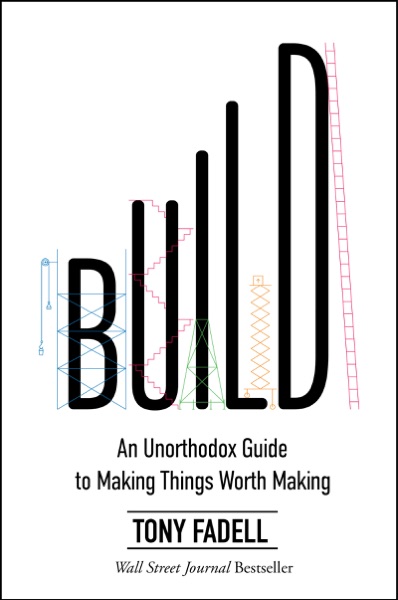
Talk to Build like its author wrote you back.
Get the ideas that fit your life — not generic summaries.
- Chat with the book
- Audiobook-style main ideas
- Adapts to your life and goals
- Helps you take action
Build, in detail
Tony Fadell was the engineer who built the iPod, the executive who led the team that created the original iPhone, and the founder of Nest, the thermostat company he sold to Google for $3.2 billion. Build, published in 2022, is his attempt to transmit what he learned across those experiences — a practical guide to making products, building teams, and navigating a career in technology without losing your principles or your sanity.
The book is organized around a set of pressing questions that anyone building a product or leading a team will face: How do you hire well? How do you manage up? How do you decide what to build? When should you leave a job? What does a great product feel like from the inside? Fadell addresses these through specific stories from his career — the negotiations with Steve Jobs, the technical decisions behind the iPod's click wheel, the conflicts inside Apple and Nest — and through the mental models he developed over time.
One of the book's central ideas is that great products solve problems people don't yet know they have. Fadell's examples — the iPod, the Nest thermostat — were not responses to expressed user demand but to frustrations that users had normalized: carrying hundreds of CDs, ignoring the programmable thermostat on the wall. His argument is that product intuition — the ability to feel a friction before it's articulated — is a learnable skill, developed by obsessive attention to how things are used in daily life.
The leadership material is direct and occasionally pointed. Fadell is clear about what he thinks good management looks like — giving feedback early and specifically, making decisions visibly, firing slowly or not slowly enough, depending on the situation — and about the patterns of dysfunction he's seen most often. He is not a systematic thinker in the way that management books often are; the advice is more anecdotal and more personal, which makes it both more readable and harder to apply as a framework. Build is long and uneven, but the sections that are good — particularly on product intuition and on navigating organizational conflict — are as practically useful as anything in the genre.
The big ideas
- 1.
Great products solve problems people have normalized — frictions and frustrations they've stopped noticing because no one has offered them a better alternative.
- 2.
Product intuition is developed by paying detailed, obsessive attention to how real people use real things in daily life — not by user research alone, but by direct, sustained observation.
- 3.
The click wheel wasn't an invention but a synthesis: Fadell's team borrowed a mechanism from Bang and Olufsen, refined it for a new context, and built a product experience around it.
