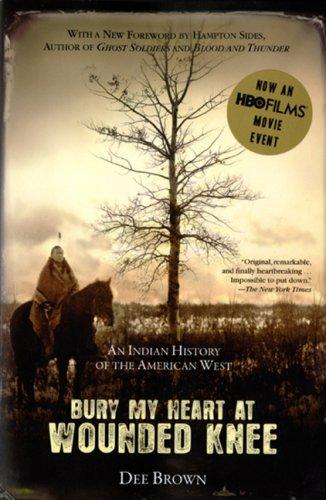
Talk to Bury My Heart at Wounded Knee: An Indian History of the American West like its author wrote you back.
Get the ideas that fit your life — not generic summaries.
- Chat with the book
- Audiobook-style main ideas
- Adapts to your life and goals
- Helps you take action
What it argues
Bury My Heart at Wounded Knee, published in 1970, is Dee Brown's account of the systematic dispossession of Native American peoples across the American West between 1860 and 1890. The book is organized chronologically and geographically, covering the Navajo Long Walk, the destruction of the Sioux, the Apache wars, the subjugation of the Cheyenne, and ending at the Wounded Knee Massacre of 1890. Brown draws extensively on U.S. government documents, treaty texts, and recorded speeches by Native leaders, allowing the official record of the United States to indict itself.
The book was a conscious intervention. When Brown published it, the dominant narrative of westward expansion was still framed largely as progress and settlement — a story told from the perspective of white Americans. Brown wanted to tell the same period from the perspective of the people who were being dispossessed, killed, and forced onto reservations. He largely succeeds by using primary sources: the speeches of Sitting Bull, Red Cloud, Chief Joseph, Geronimo, and others are reproduced at length and with evident care. These men appear not as romantic figures or exotic obstacles but as political leaders making difficult calculations in a collapsing world.
What it gets right
- 1.
The dispossession of Native Americans in the West was not a series of isolated conflicts but a systematic policy, repeated across different peoples and regions with consistent methods and goals.
- 2.
U.S. treaty obligations were routinely broken when new resource discoveries or political pressures made them inconvenient — a pattern so consistent it constitutes a de facto policy rather than a series of failures.
- 3.
Native American leaders were sophisticated political and military strategists, not romantic figures or primitive warriors — the book recovers their voices through extensive quotation from primary sources.
What it covers
Who wrote it
Dee Brown (1908–2002) was an American author and librarian who spent much of his career at the University of Illinois. He wrote more than thirty books on American Western and Civil War history, including Creek Mary's Blood and The American West. Bury My Heart at Wounded Knee, published in 1970, became an international bestseller and is widely credited with shifting mainstream American understanding of westward expansion. Brown was of partial Cherokee descent and spent decades documenting Native American history before and after the book's publication.
