Business · Book club
Business Adventures: Twelve Classic Tales from the World of Wall Street book club questions
Here are 12 book club questions for Business Adventures: Twelve Classic Tales from the World of Wall Street by John Brooks, ordered to open easily and end somewhere worth arguing about. Copy them, print them, or bring them up one at a time.
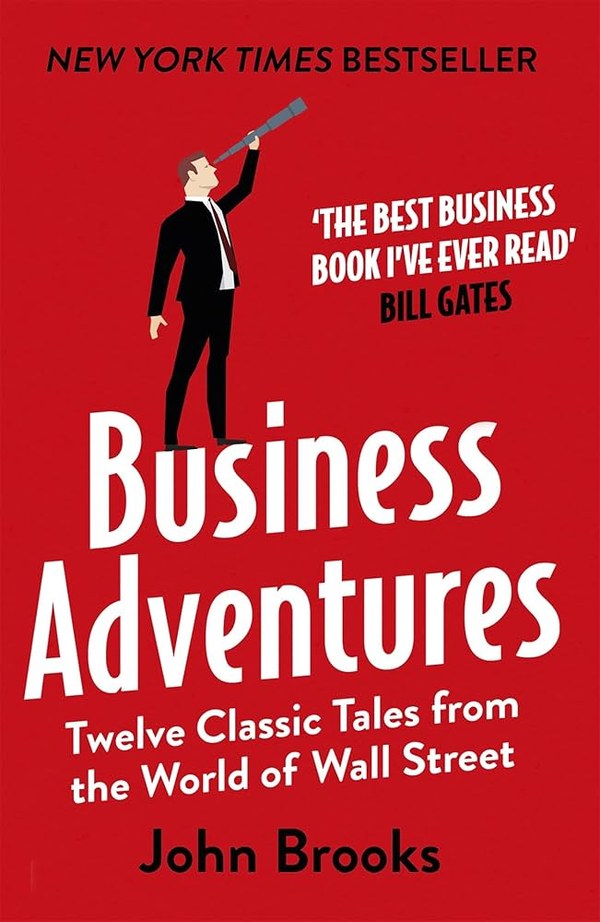
Business Adventures is a collection of twelve long-form New Yorker profiles originally published between 1959 and 1969.
John Brooks · 1969 · 6h 45m
Full summary and key takeaways →The 12 questions
- 1.
Brooks argues implicitly that human psychology drives corporate decisions more than strategy does. Which story in the book makes that case most powerfully for you?
- 2.
The Edsel chapter is often cited as the definitive example of market research producing the wrong answer. What does it suggest about the limits of data-driven decision-making in your own field?
- 3.
Brooks wrote these profiles in the 1960s, but Buffett and Gates praised the book in the 1990s and 2000s. What do you think makes sixty-year-old business reporting still feel relevant?
- 4.
The 1962 stock market panic is described as psychologically driven and largely disconnected from fundamentals. How does that account map onto financial market behavior you have observed?
- 5.
Price-fixing in the electrical industry involved executives from major corporations rationalizing systematic deception. What organizational conditions allow ethical failures to become normalized?
- 6.
Several chapters involve people who believed they were acting rationally but were clearly not. Where in your own professional experience have you seen that gap most vividly?
- 7.
The Piggly Wiggly founder tried to corner the market in his own stock as an act of personal revenge. What does that episode reveal about how ego and business judgment interact?
- 8.
Brooks's subjects include both famous companies and obscure ones. Does the obscurity of some stories make them more or less useful as examples?
- 9.
What does reading corporate history from the 1960s reveal about what has changed in American business culture, and what has stayed the same?
- 10.
Brooks came from journalism, not finance. Does an outsider's perspective on business produce a different kind of insight than writing from inside the industry?
- 11.
Gates called this the best business book he ever read. What do you think he saw in it that justified that claim?
- 12.
If Brooks were profiling twelve companies today, which stories do you think would most deserve the same careful attention he gave to the Edsel or the 1962 crash?
How to run the discussion
- Pick six to eight, not all of them. An hour of real discussion covers fewer questions than anyone expects, and racing the list is what makes a book club feel like homework.
- Open with what people noticed, not what they concluded. Asking for a verdict first hardens opinions before anyone has heard each other.
- Let the disagreement run. The questions below that split a room are the ones worth the time; the ones everyone answers the same way can be skipped.
- Ask the quiet person a specific question. A direct, narrow question is far easier to answer than an open invitation to contribute.
Themes worth steering toward
If the conversation stalls, these are the threads that usually restart it.
Common questions
What are good book club questions for Business Adventures: Twelve Classic Tales from the World of Wall Street?
Here are 12 book club questions for Business Adventures: Twelve Classic Tales from the World of Wall Street by John Brooks, ordered to open easily and end somewhere worth arguing about. The strongest openers ask what each reader noticed rather than what they concluded, and the discussion usually turns on corporate history, wall street, business culture.
How long should a book club discussion of Business Adventures: Twelve Classic Tales from the World of Wall Street last?
Most groups run 60 to 90 minutes of actual discussion. That is roughly six to eight questions, not all of them, so pick the ones that suit your group rather than working down the list in order.
What are the main themes in Business Adventures: Twelve Classic Tales from the World of Wall Street?
Corporate history, Wall Street, Business culture, Human behavior, Financial markets. Those are the threads most likely to divide a room, which makes them the useful places to steer a discussion that has gone quiet.
Picking the next one? See books like Business Adventures: Twelve Classic Tales from the World of Wall Street or questions for other book club picks.
