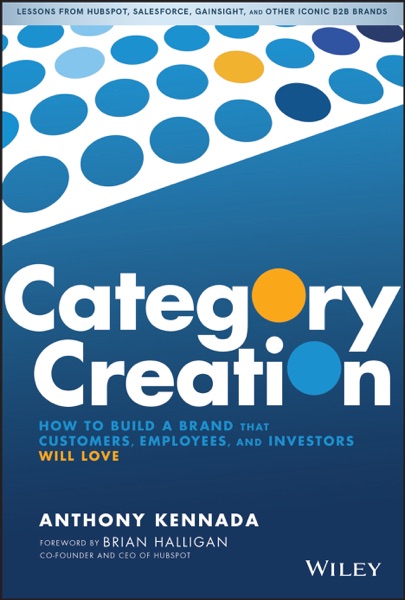
Talk to Category Creation: How to Build a Brand That Customers, Employees, and Investors Will Love like its author wrote you back.
Get the ideas that fit your life — not generic summaries.
- Chat with the book
- Audiobook-style main ideas
- Adapts to your life and goals
- Helps you take action
Category Creation: How to Build a Brand That Customers, Employees, and Investors Will Love, in detail
Category Creation is Anthony Kennada's account of how Gainsight, where he served as chief marketing officer, built the customer success management category from scratch — and the broader argument that this approach to marketing, creating a new market category rather than competing within an existing one, produces compounding advantages that conventional brand-building rarely matches. The book is part memoir of a specific company's marketing journey, part framework for how to attempt the same.
Kennada's central argument is that category creation is not primarily about product features or competitive positioning. It's about identifying a problem that exists but isn't yet widely named, naming it, and then becoming the definitional leader of the conversation that forms around that problem. Gainsight didn't just sell software for managing customer retention; it defined "customer success" as a business function, gave it a job title, and built a community of practitioners who needed that function to exist. The software sale followed the category creation, rather than the other way around.
The book is structured around what Kennada calls the four pillars of category creation: creating a market-defining point of view, building a community of believers, developing a dedicated brand for the category itself (not just the company), and mobilizing customers as advocates. He is specific about tactics: the types of content that establish thought leadership, how Pulse (Gainsight's annual conference) was designed to build community identity rather than just generate leads, and how to separate the category brand from the company brand in a way that makes both stronger.
The book is honest about the scope of the commitment. Category creation requires years of sustained investment in content, community, and evangelism before it produces measurable commercial return. It is a strategy for companies with the patience and resources to invest in long-cycle returns — not a quick-growth tactic. Kennada is also candid that category creation can fail: if the problem doesn't resonate widely enough, or if a better-resourced competitor defines the category before you do, the investment can go unrewarded.
The big ideas
- 1.
Category creation means identifying a problem that exists but isn't yet named, naming it, and becoming the definitional leader of the conversation around it. The company that names the category typically leads it.
- 2.
Community is the most durable moat in category creation. A category-leading company doesn't just have customers — it has a professional community whose identity is tied to the category itself.
- 3.
The category brand and the company brand are different assets. Building the category brand first creates a rising tide that lifts the company, while protecting against any single competitor claiming category leadership.
