Business · Book club
Co-Active Coaching book club questions
Here are 12 book club questions for Co-Active Coaching by Henry Kimsey-House, Karen Kimsey-House, Phillip Sandahl, and Laura Whitworth, ordered to open easily and end somewhere worth arguing about. Copy them, print them, or bring them up one at a time.
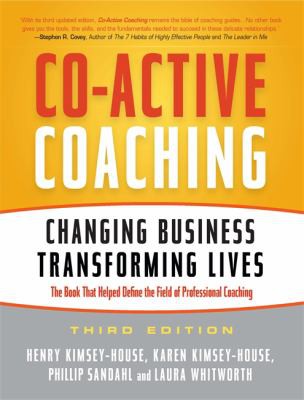
Co-Active Coaching presents the model developed at the Coaches Training Institute (CTI), which has trained more professional coaches than any other organization in the world.
Henry Kimsey-House, Karen Kimsey-House, Phillip Sandahl, and Laura Whitworth · 1998 · 4h 45m
Full summary and key takeaways →The 12 questions
- 1.
The book says coaches treat clients as naturally creative, resourceful, and whole. Is that assumption always warranted, and what happens when it's tested?
- 2.
Level II and Level III listening require setting aside your own agenda and reactions. How much of your typical conversation operates at those levels, honestly?
- 3.
The co-active model argues the agenda must come from the client. How does that apply in management or parenting, where the relationship has inherent authority differences?
- 4.
Which saboteur — inner critic, controller, restlessness, arrogance — do you recognize most readily in yourself?
- 5.
What is the difference between a coaching conversation and a good friendship? Where does the model add something that friendship doesn't?
- 6.
The book argues that coaching addresses the whole person's life, not just the presenting issue. When is that breadth useful, and when is it an overreach?
- 7.
Powerful questions are described as opening rather than closing. What question have you been asked that genuinely opened something for you?
- 8.
The co-active model has been widely adopted in corporate settings. What gets lost when a commercial training program imports a coaching philosophy into an organizational hierarchy?
- 9.
The book treats the coach-client relationship as fully mutual — both fully engaged. How does that differ from how most helping relationships actually work?
- 10.
Forwarding and deepening are described as complementary movements. Where in your own relationships do you tend to emphasize one at the expense of the other?
- 11.
The exercises in the book require practice with a partner. How much of what the model describes can actually be learned from reading, and how much requires doing?
- 12.
The CTI approach assumes clients are the experts on their own lives. Where does that assumption break down — in addiction, in crisis, in profound self-deception?
How to run the discussion
- Pick six to eight, not all of them. An hour of real discussion covers fewer questions than anyone expects, and racing the list is what makes a book club feel like homework.
- Open with what people noticed, not what they concluded. Asking for a verdict first hardens opinions before anyone has heard each other.
- Let the disagreement run. The questions below that split a room are the ones worth the time; the ones everyone answers the same way can be skipped.
- Ask the quiet person a specific question. A direct, narrow question is far easier to answer than an open invitation to contribute.
Themes worth steering toward
If the conversation stalls, these are the threads that usually restart it.
Common questions
What are good book club questions for Co-Active Coaching?
Here are 12 book club questions for Co-Active Coaching by Henry Kimsey-House, Karen Kimsey-House, Phillip Sandahl, and Laura Whitworth, ordered to open easily and end somewhere worth arguing about. The strongest openers ask what each reader noticed rather than what they concluded, and the discussion usually turns on coaching, leadership development, communication.
How long should a book club discussion of Co-Active Coaching last?
Most groups run 60 to 90 minutes of actual discussion. That is roughly six to eight questions, not all of them, so pick the ones that suit your group rather than working down the list in order.
What are the main themes in Co-Active Coaching?
Coaching, Leadership development, Communication, Self-awareness, Transformation. Those are the threads most likely to divide a room, which makes them the useful places to steer a discussion that has gone quiet.
Picking the next one? See books like Co-Active Coaching or questions for other book club picks.
