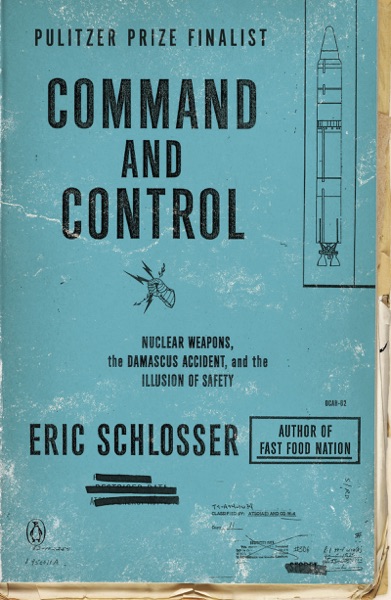
Talk to Command and Control: Nuclear Weapons, the Damascus Accident, and the Illusion of Safety like its author wrote you back.
Get the ideas that fit your life — not generic summaries.
- Chat with the book
- Audiobook-style main ideas
- Adapts to your life and goals
- Helps you take action
What it argues
Command and Control is Eric Schlosser's investigation into the hidden history of nuclear weapons accidents and the organizations that tried to prevent them from detonating by accident. The book runs two tracks simultaneously: a detailed account of the 1980 Damascus, Arkansas missile explosion — in which a Titan II intercontinental ballistic missile caught fire and blew up in its silo, scattering a nine-megaton warhead across the Arkansas countryside — and a broader history of how the United States came to possess thousands of nuclear weapons it struggled to control safely.
Schlosser spent six years on the research and uncovered documents showing that near-catastrophes were far more common than the government ever acknowledged. A B-52 broke apart over North Carolina in 1961 and dropped two hydrogen bombs; investigators later found that a single low-voltage switch was all that stood between a detonation and survival. A Titan II in Kansas accidentally released a warhead that fell thirty feet before stopping just short of the ground. Schlosser catalogs dozens of similar events — collectively known as "broken arrows" — and traces the bureaucratic dynamics that allowed each one to be covered up or downplayed.
What it gets right
- 1.
The United States experienced dozens of nuclear weapons accidents during the Cold War, most of which were never publicly disclosed. Several came extremely close to detonation.
- 2.
The 1961 Goldsboro B-52 crash dropped two hydrogen bombs over North Carolina. One bomb armed and deployed its parachute. A single low-voltage switch prevented detonation.
- 3.
The 1980 Damascus explosion destroyed a Titan II silo and scattered a nine-megaton warhead across Arkansas. The warhead's conventional explosives detonated but the nuclear stage did not — due largely to luck.
What it covers
Who wrote it
Eric Schlosser is an American journalist and author known for deeply reported investigations into American institutions. His first book, Fast Food Nation, transformed public understanding of the food industry. Command and Control followed six years of research into nuclear weapons archives and interviews with former military personnel and weapons designers. He has contributed to The Atlantic, The New Yorker, and Rolling Stone, and has served as a producer on documentary films including Food, Inc. He lives in California.
