Talk to Competitive Strategy like its author wrote you back.
Get the ideas that fit your life — not generic summaries.
- Chat with the book
- Audiobook-style main ideas
- Adapts to your life and goals
- Helps you take action
What it argues
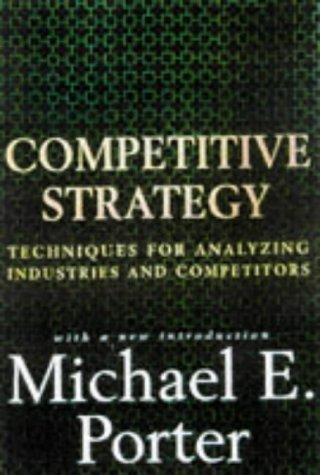
Competitive Strategy is Michael Porter's foundational framework for analyzing industries and developing competitive strategy. Published in 1980 when strategic planning was dominated by portfolio matrices and market share doctrine, it shifted the field by asking a more fundamental question: what determines whether an industry is attractive, and what determines which companies within that industry can achieve sustained profitability?
The Five Forces framework is Porter's answer to the first question. The profitability of any industry is shaped by five structural forces: the intensity of rivalry among existing competitors, the threat of new entrants, the bargaining power of buyers, the bargaining power of suppliers, and the threat of substitute products. An industry where all five forces are weak — like pharmaceuticals in the 1990s — generates consistently high returns. An industry where multiple forces are strong — like commodity airlines — generates chronically poor returns regardless of how well individual companies are managed. The implication: before investing in strategy, understand your structural position.
What it gets right
- 1.
Industry structure, not company execution, is the primary determinant of average profitability. Choosing the right industry matters as much as competing well within it.
- 2.
The Five Forces framework: rivalry intensity, threat of new entrants, bargaining power of buyers, bargaining power of suppliers, and threat of substitutes collectively determine industry attractiveness.
- 3.
Entry barriers — economies of scale, brand identity, capital requirements, switching costs, government policy — determine how easily new competitors can enter and erode industry returns.
What it covers
Who wrote it
Michael E. Porter is a professor at Harvard Business School and one of the most cited economists in the world. He is the founder of the modern field of competitive strategy and the creator of the Five Forces framework, the generic strategies model, and the value chain concept. He has written nineteen books and more than 130 articles, including Competitive Advantage and The Competitive Advantage of Nations. His work has influenced how corporations, governments, and international institutions think about competition, economic development, and healthcare delivery.
