Talk to Conversations with Friends like its author wrote you back.
Get the ideas that fit your life — not generic summaries.
- Chat with the book
- Audiobook-style main ideas
- Adapts to your life and goals
- Helps you take action
Conversations with Friends, in detail
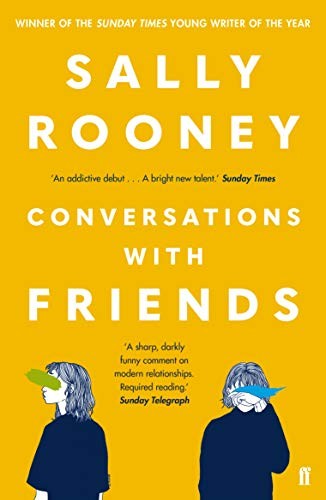
Conversations with Friends is told by Frances, a twenty-one-year-old Dublin student who performs spoken-word poetry with her best friend and ex-girlfriend Bobbi. Through Bobbi, Frances meets Melissa, a journalist, and Nick, an actor — a married couple in their thirties who exist at a higher social altitude. Frances begins an affair with Nick. The novel traces that affair's arc while also tracking the more complicated thing happening between Frances and Bobbi, and between Frances and her own sense of who she is.
The book is a study in self-deception and the pleasures of it. Frances is an exceptionally unreliable narrator — not because she lies to the reader but because she lies to herself, relentlessly. She is drawn to people who confer status and sophistication, while simultaneously constructing an identity as someone above wanting those things. Rooney is precise about this: how ideology can be a form of social performance, how articulate self-awareness can coexist with complete emotional blindness.
Compared to Normal People, this debut is slightly rougher and in some ways more interesting. The prose is sharper in places, more willing to be uncomfortable. The four main characters all occupy a specific Dublin upper-middle-class intellectual milieu that Rooney renders with the accuracy of insider knowledge — the dinner parties, the literary references, the way the characters perform progressive politics while living entirely conventional emotional lives.
Readers who loved Normal People will find familiar obsessions here: the failed communication, the class consciousness, the precise rendering of social anxiety. The difference is tone. Conversations with Friends is cooler, more ironic, and more willing to make Frances unpleasant. It is a better book for readers who want a harder edge and a weaker book for those who want warmth. Frances is harder to love than either Connell or Marianne, which is exactly the point.
The big ideas
- 1.
Frances narrates with total confidence and is frequently wrong about herself — Rooney uses the gap between what Frances says and what she clearly feels as the novel's central irony.
- 2.
The affair with Nick is depicted neither as romantic liberation nor as simple transgression, but as a complicated negotiation of need and power that changes all four characters.
- 3.
Bobbi is the novel's most underwritten character, which feels like a deliberate choice — Frances tells us about Bobbi but consistently fails to see her clearly.
