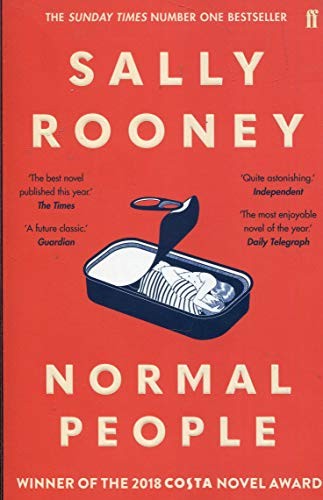
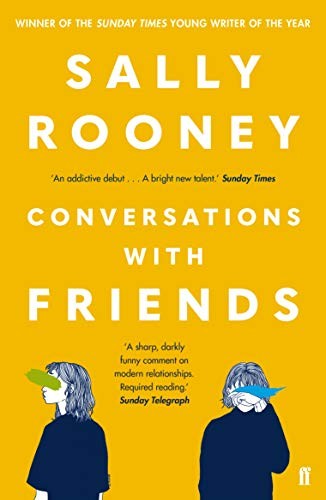
Conversations with Friends by Sally Rooney is a 2017 literary fiction book about desire and self-knowledge, friendship and betrayal, class and privilege. Frances narrates with total confidence and is frequently wrong about herself — Rooney uses the gap between what Frances says and what she clearly feels as the novel's central irony.
Summary
Conversations with Friends is told by Frances, a twenty-one-year-old Dublin student who performs spoken-word poetry with her best friend and ex-girlfriend Bobbi. Through Bobbi, Frances meets Melissa, a journalist, and Nick, an actor — a married couple in their thirties who exist at a higher social altitude. Frances begins an affair with Nick. The novel traces that affair's arc while also tracking the more complicated thing happening between Frances and Bobbi, and between Frances and her own sense of who she is.
The book is a study in self-deception and the pleasures of it. Frances is an exceptionally unreliable narrator — not because she lies to the reader but because she lies to herself, relentlessly. She is drawn to people who confer status and sophistication, while simultaneously constructing an identity as someone above wanting those things. Rooney is precise about this: how ideology can be a form of social performance, how articulate self-awareness can coexist with complete emotional blindness.
Compared to Normal People, this debut is slightly rougher and in some ways more interesting. The prose is sharper in places, more willing to be uncomfortable. The four main characters all occupy a specific Dublin upper-middle-class intellectual milieu that Rooney renders with the accuracy of insider knowledge — the dinner parties, the literary references, the way the characters perform progressive politics while living entirely conventional emotional lives.
Readers who loved Normal People will find familiar obsessions here: the failed communication, the class consciousness, the precise rendering of social anxiety. The difference is tone. Conversations with Friends is cooler, more ironic, and more willing to make Frances unpleasant. It is a better book for readers who want a harder edge and a weaker book for those who want warmth. Frances is harder to love than either Connell or Marianne, which is exactly the point.
Talk to Conversations with Friends like its author wrote you back.
Get the ideas that fit your life — not generic summaries.
- Chat with the book
- Audiobook-style main ideas
- Adapts to your life and goals
- Helps you take action
Key takeaways
- 1.
Frances narrates with total confidence and is frequently wrong about herself — Rooney uses the gap between what Frances says and what she clearly feels as the novel's central irony.
- 2.
The affair with Nick is depicted neither as romantic liberation nor as simple transgression, but as a complicated negotiation of need and power that changes all four characters.
- 3.
Bobbi is the novel's most underwritten character, which feels like a deliberate choice — Frances tells us about Bobbi but consistently fails to see her clearly.
- 4.
The novel is deeply interested in how smart people use intellectual frameworks to avoid emotional honesty — Frances's Marxism, her detachment, are both genuine and self-serving.
- 5.
Melissa is the most morally complex figure: wronged, perceptive, and neither pitied nor vilified by the narrative in a way that would make her easier to process.
- 6.
Chronic illness enters the novel midway and shifts its register — Frances's endometriosis is handled without sentimentality in a way that illuminates how illness disrupts the performance of competence.
- 7.
The novel ends without resolution in a way that refuses both punishment and redemption — Frances is still exactly who she was, slightly cracked open, still not entirely honest.
- 8.
Rooney writes about sex with unusual clarity — not explicit but precise about desire as a form of power negotiation rather than just feeling.
Discussion questions
Use these on your own, with a book club, or as chat starters in Superbook. Book club version, ready to copy or print →
- 1.
Frances maintains that she doesn't have feelings, or that feelings are something she observes from a distance. By the end of the novel, does she still believe this? Does the reader?
- 2.
Nick is passive, accommodating, and somewhat flat as a character. Is that a flaw in the novel or a deliberate choice about who Frances is capable of seeing clearly?
- 3.
The novel is set in a specific Dublin intellectual milieu — dinner parties, literary magazines, progressive politics. How much does this setting define the characters? Would they be the same people in a different context?
- 4.
Frances and Bobbi describe their relationship as a friendship after having been lovers. Is that framing honest, or is the novel suggesting something more complicated is still happening?
- 5.
Melissa knows about the affair, eventually. How does the novel want us to feel about her response? Do you think that response is realistic?
- 6.
Frances uses the language of politics and theory to analyze her own life. Does the novel suggest this is useful, or a sophisticated form of avoidance?
- 7.
The endometriosis subplot arrives fairly late. What does it change? Does Frances's illness affect how you read her emotional detachment earlier in the book?
- 8.
Compared to Normal People, is Frances or Marianne a more honest self-portrait of a certain kind of young woman? Which novel is more unsettling to read?
- 9.
By the end, Frances is considering resuming the affair. Is this a hopeful sign of emotional growth or evidence that she hasn't changed at all?
- 10.
Who has the most power in the four-way dynamic between Frances, Bobbi, Nick, and Melissa? Does it shift over the course of the novel?
- 11.
The novel implies that Frances is attracted to Nick partly because of his higher social position. How much does class operate as erotic charge in Rooney's work?
- 12.
Rooney has said she wanted to write a novel that didn't punish people for infidelity in the conventional way. Did she succeed? Is the novel actually morally neutral about the affair?
Themes
Frequently asked questions
-
Should I read Conversations with Friends before Normal People?
Order doesn't matter much, but starting with Conversations with Friends means meeting Rooney's world in rougher, more acidic form before the warmer register of Normal People. Reading in publication order also lets you watch her technique develop. Either way works.
-
Is Conversations with Friends as good as Normal People?
Different. It's slightly less polished and the characters are less immediately sympathetic, but it's sharper in places and more willing to make the protagonist unlikable. Fans of Normal People who want more warmth may prefer the later novel; readers who found Normal People slightly too tender may actually prefer this one.
-
What is Conversations with Friends about without spoilers?
A college student in Dublin falls into an affair with a married actor while her friendship with her best friend-turned-ex begins to fray. It's really about a young woman who is very good at analyzing everything except herself.
-
Is there a TV adaptation?
Yes, a 2022 Hulu/BBC series with the same creative team behind the Normal People adaptation. It received a more mixed reception — the novel's cool, ironic tone proved harder to translate to screen than Normal People's emotional directness.
-
Who shouldn't read this book?
Readers who need at least one clearly sympathetic character, or who find novels about young people's romantic and social maneuvering trivial. Frances is written to be difficult to root for, which is the point, but it tests patience.