Literary fiction · Book club
Crudo book club questions
Here are 11 book club questions for Crudo by Olivia Laing, ordered to open easily and end somewhere worth arguing about. Copy them, print them, or bring them up one at a time.
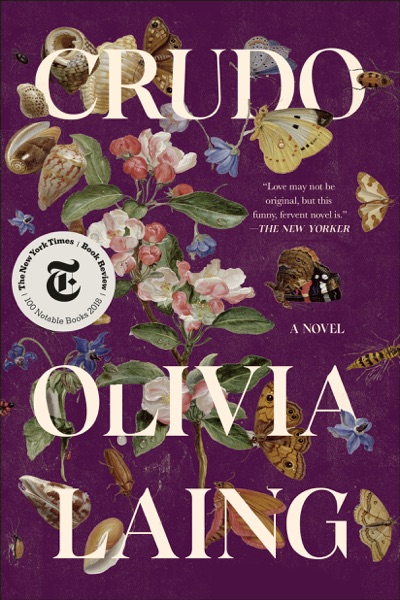
Crudo is a novel written in real time, in the summer of 2017, about a woman named Kathy — who is also Kathy Acker — getting married.
Olivia Laing · 2018 · 2h 20m
Full summary and key takeaways →The 11 questions
- 1.
Laing wrote Crudo in seven weeks without revising the political context. Does knowing that change how you read the book, or does the process not matter if the result works?
- 2.
Kathy is simultaneously Laing and Kathy Acker. What does that doubling accomplish — what can a character-who-is-also-a-ghost say that a straightforward narrator cannot?
- 3.
The novel's marriage plot is deliberately thin. Is that a formal choice Laing has earned, or does it feel like an excuse not to write the harder scenes?
- 4.
Crudo is full of real news events — Brexit negotiations, Trump tweets, Harvey, Irma. Does embedding real events anchor the novel in time or date it in a way that limits it?
- 5.
How does the novel's anxiety feel compared to your own experience of that period? Does it resonate or does it feel like a specifically privileged anxiety?
- 6.
Laing's prose borrows from Kathy Acker's cut-up style. If you haven't read Acker, does that matter? Is the novel accessible without the reference point?
- 7.
The novel is very short — under 200 pages, probably under two hours of reading. Does that length feel right for what it's trying to do, or does it feel slight?
- 8.
Kathy is a writer marrying a man named Ian who is clearly comfortable with commitment in a way she isn't. How does the novel handle the asymmetry between them?
- 9.
Is Crudo a novel about the difficulty of being present — in a marriage, in a moment, in a body — or is it itself an example of being unable to be present?
- 10.
The anxiety in the novel is inseparable from privilege — Kathy is getting married, going to nice restaurants, taking holidays, even as the world falls apart. Does the novel acknowledge that tension adequately?
- 11.
If you've read Laing's nonfiction — The Lonely City, Everybody — where does Crudo sit in her project? Does it feel more or less honest than her essays?
How to run the discussion
- Pick six to eight, not all of them. An hour of real discussion covers fewer questions than anyone expects, and racing the list is what makes a book club feel like homework.
- Open with what people noticed, not what they concluded. Asking for a verdict first hardens opinions before anyone has heard each other.
- Let the disagreement run. The questions below that split a room are the ones worth the time; the ones everyone answers the same way can be skipped.
- Ask the quiet person a specific question. A direct, narrow question is far easier to answer than an open invitation to contribute.
Themes worth steering toward
If the conversation stalls, these are the threads that usually restart it.
Common questions
What are good book club questions for Crudo?
Here are 11 book club questions for Crudo by Olivia Laing, ordered to open easily and end somewhere worth arguing about. The strongest openers ask what each reader noticed rather than what they concluded, and the discussion usually turns on anxiety and dread, marriage and commitment, political crisis.
How long should a book club discussion of Crudo last?
Most groups run 60 to 90 minutes of actual discussion. That is roughly six to eight questions, not all of them, so pick the ones that suit your group rather than working down the list in order.
What are the main themes in Crudo?
Anxiety and dread, Marriage and commitment, Political crisis, Time and the present moment, Writing and self-invention. Those are the threads most likely to divide a room, which makes them the useful places to steer a discussion that has gone quiet.
Picking the next one? See books like Crudo or questions for other book club picks.
