Talk to Dark Matter like its author wrote you back.
Get the ideas that fit your life — not generic summaries.
- Chat with the book
- Audiobook-style main ideas
- Adapts to your life and goals
- Helps you take action
Dark Matter, in detail
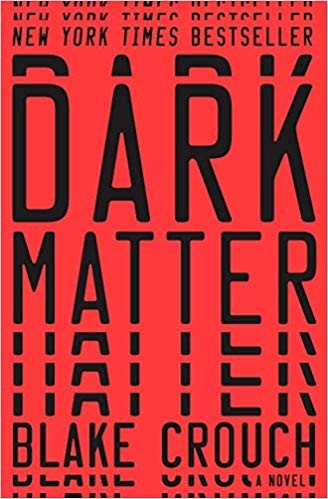
Jason Dessen is a physics professor in Chicago, content with his career, his marriage to Daniela, and his teenage son. One evening he's abducted, injected with something, and wakes up in a laboratory where he is apparently a celebrated scientist who made a breakthrough he doesn't remember making — and where his wife and son don't exist. The novel is a chase story and a puzzle: how did Jason get here, how does he get back, and who did this to him?
The quantum mechanics framework is real, if simplified. Crouch builds his multiverse around the many-worlds interpretation of quantum physics — the idea that every quantum event spawns divergent realities. Jason navigates between these realities using a device that allows the observer's mental state to determine which branch of reality is entered. The emotional core of this apparatus is the question of what constitutes your identity across versions of yourself: if you chose differently at every major fork, is the result still you?
What makes Dark Matter work as a thriller — and it is primarily a thriller — is that Crouch keeps escalating the stakes through the novel's final third in a way that the premise genuinely supports. The problem Jason faces in the last act is not artificial; it follows logically from the multiverse concept and is more philosophically uncomfortable than anything in the setup. The prose is stripped-down and fast, designed for momentum rather than depth.
This is an airport thriller that is smarter than it has to be, not a literary novel that happens to move quickly. Readers who want to think about the multiverse as a philosophical problem will find the novel a useful primer but not a rigorous examination. Readers who want a fast, confident science fiction thriller with a genuine emotional engine will find it close to ideal. The ending is hopeful in a way that may feel earned or may feel convenient depending on your tolerance for genre resolutions.
The big ideas
- 1.
The novel uses quantum branching to ask a genuinely interesting question: if you made different choices, you would be a different person — so what exactly is the 'you' that persists across those branches?
- 2.
The device works by the observer's emotional state selecting the reality they enter, which makes the science simultaneously about physics and about the quality of attention you bring to your life.
- 3.
Crouch's multiverse is not a parallel-worlds tourism story — the divergent realities are terrifying rather than romantic, mostly because they remind you of what you've lost or never had.
