Talk to Die with Zero like its author wrote you back.
Get the ideas that fit your life — not generic summaries.
- Chat with the book
- Audiobook-style main ideas
- Adapts to your life and goals
- Helps you take action
What it argues
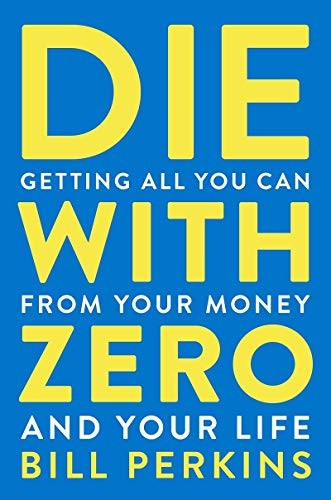
Die with Zero is Bill Perkins's argument that most people with means make a significant life mistake: they optimize for financial security and end up dying with far more money than they ever spent, having failed to convert accumulated wealth into meaningful experiences at the age when those experiences are most valuable. Perkins, an energy trader who became wealthy in his thirties, spent years watching colleagues accumulate vast wealth and then be unable to use it effectively when their health and mobility declined. The book is his case for a different optimization target: maximize the total of meaningful experiences across your life, not the balance in your account at death.
The central concept is the "memory dividend" — experiences generate positive memories that pay dividends through recollection and the stories you tell for years afterward. A trip taken at 30 pays memory dividends for decades. The same trip taken at 75, if your health allows it at all, has a shorter dividend window. The implication is that experiences have a time-sensitivity that financial assets do not, and that delaying experiences to accumulate more money is often an objectively poor tradeoff.
What it gets right
- 1.
Money unspent is life unlived. Optimizing for maximum account balance at death is an error that trades real experiences for numbers in an account.
- 2.
Memory dividends are real: experiences generate ongoing positive returns through recollection, stories, and relationships. Delaying valuable experiences reduces the total return.
- 3.
Experiences have optimal ages. Health and mobility enable certain experiences at 40 that may be impossible at 70. Timing matters as much as the decision to have the experience at all.
What it covers
Who wrote it
Bill Perkins is an energy trader, poker player, film producer, and investor who has managed over a billion dollars in energy trades. He grew up modestly in Houston, worked his way through the University of Iowa, and built his wealth through trading in the energy markets in the 1990s and 2000s. Perkins has competed in high-stakes poker tournaments and produced a number of independent films. Die with Zero, published in 2020, is his first book. He has discussed the ideas in it extensively through podcasts and speaking appearances. Perkins is known for living according to the principles he describes — spending substantially on experiences while continuing to work at projects he…
