Talk to Difficult Conversations like its author wrote you back.
Get the ideas that fit your life — not generic summaries.
- Chat with the book
- Audiobook-style main ideas
- Adapts to your life and goals
- Helps you take action
What it argues
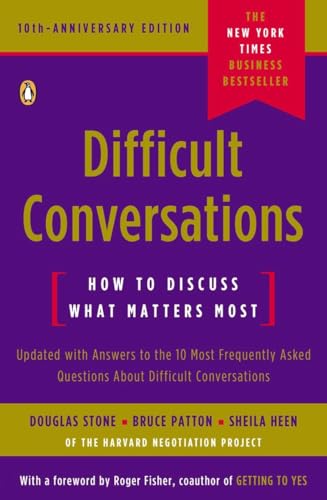
Difficult Conversations is the product of the Harvard Negotiation Project, the same research group that produced Getting to Yes. Where Getting to Yes is about negotiating agreements, Difficult Conversations is about the interpersonal conversations that are hardest to have — telling someone they're being let go, confronting someone about their behavior, admitting you've made a mistake, or asking for what you need from someone who has more power than you.
The book's central insight is that every difficult conversation is actually three conversations happening simultaneously. The "what happened" conversation is about the facts, intentions, and contributions to a situation. The feelings conversation is about the emotions both parties have that rarely get named. The identity conversation is about what each person believes the outcome will say about who they are. Most conversations go badly because people stay in the "what happened" conversation without acknowledging the feelings and identity conversations running underneath.
What it gets right
- 1.
Every difficult conversation is three conversations: what happened (facts and interpretations), feelings (emotions that often go unnamed), and identity (what the conversation implies about who you are).
- 2.
Staying in the 'what happened' conversation while feelings and identity run unacknowledged underneath is the most common reason difficult conversations go badly.
- 3.
Attributing intentions — 'you did this on purpose to hurt me' — is almost always a guess, and acting as if the guess is a fact makes the conversation worse. Ask about intentions; don't assume them.
What it covers
Who wrote it
Douglas Stone, Bruce Patton, and Sheila Heen are members of the Harvard Negotiation Project at Harvard Law School. Stone and Heen teach negotiation at Harvard Law School; Patton has taught negotiation at Harvard for decades and co-authored Getting to Yes. The three have consulted with governments, corporations, and international organizations on negotiation and conflict resolution. Heen is also the co-author with Stone of Thanks for the Feedback, which extends the Difficult Conversations framework to receiving feedback effectively.
