Art · Book club
Drawing on the Right Side of the Brain book club questions
Here are 12 book club questions for Drawing on the Right Side of the Brain by Betty Edwards, ordered to open easily and end somewhere worth arguing about. Copy them, print them, or bring them up one at a time.
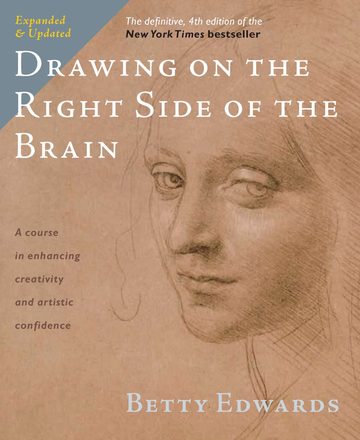
Drawing on the Right Side of the Brain rests on a claim that has quietly reassured millions of self-declared non-artists: drawing is not a gift you're born with but a learnable skill, and it is a skill of seeing rather than of the hand.
Betty Edwards · 1979 · 5h 20m
Full summary and key takeaways →The 12 questions
- 1.
Edwards claims almost anyone can learn to draw. If you've called yourself 'someone who can't draw,' what has that belief quietly cost you?
- 2.
The book argues drawing is really a skill of seeing. Where else in life might you be limited less by ability than by how you're perceiving the problem?
- 3.
Why do you think the symbols we settle on as children — the schematic sun, house and face — are so hard to override as adults?
- 4.
The upside-down drawing exercise defeats your naming mind. Have you found other tricks that quiet your analytical mode and let you focus?
- 5.
Edwards describes losing track of time and words while drawing. When did you last enter that kind of absorbed, non-verbal state, and doing what?
- 6.
Which of the five perceptual skills — edges, spaces, relationships, light, the whole — do you expect you'd find hardest, and why?
- 7.
Negative space asks you to attend to the 'nothing' around an object. Where in your work or life do you overlook the spaces between the obvious things?
- 8.
The book's neuroscience is dated even though its exercises work. How do you weigh a method that's effective in practice but shaky in theory?
- 9.
Edwards has you draw before and after the course to measure change. What skill could you 'baseline' now so you can see your own progress later?
- 10.
Drawing forces slow, sustained looking. What would you notice about a familiar object or person if you had to draw it for an hour?
- 11.
The method teaches realism as a foundation, not personal style. When learning any craft, how do you balance mastering fundamentals against finding your own voice?
- 12.
If seeing clearly is a trainable skill, what in your daily life would most reward learning to look at it with fresh eyes?
How to run the discussion
- Pick six to eight, not all of them. An hour of real discussion covers fewer questions than anyone expects, and racing the list is what makes a book club feel like homework.
- Open with what people noticed, not what they concluded. Asking for a verdict first hardens opinions before anyone has heard each other.
- Let the disagreement run. The questions below that split a room are the ones worth the time; the ones everyone answers the same way can be skipped.
- Ask the quiet person a specific question. A direct, narrow question is far easier to answer than an open invitation to contribute.
Themes worth steering toward
If the conversation stalls, these are the threads that usually restart it.
Common questions
What are good book club questions for Drawing on the Right Side of the Brain?
Here are 12 book club questions for Drawing on the Right Side of the Brain by Betty Edwards, ordered to open easily and end somewhere worth arguing about. The strongest openers ask what each reader noticed rather than what they concluded, and the discussion usually turns on drawing, perception, learning to see.
How long should a book club discussion of Drawing on the Right Side of the Brain last?
Most groups run 60 to 90 minutes of actual discussion. That is roughly six to eight questions, not all of them, so pick the ones that suit your group rather than working down the list in order.
What are the main themes in Drawing on the Right Side of the Brain?
Drawing, Perception, Learning to see, Creativity, Right-brain mode. Those are the threads most likely to divide a room, which makes them the useful places to steer a discussion that has gone quiet.
Picking the next one? See books like Drawing on the Right Side of the Brain or questions for other book club picks.
