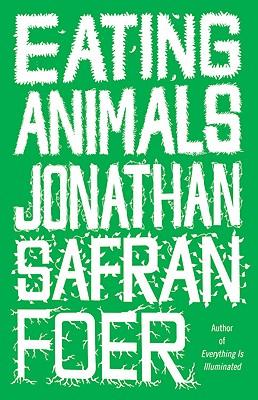
Talk to Eating Animals like its author wrote you back.
Get the ideas that fit your life — not generic summaries.
- Chat with the book
- Audiobook-style main ideas
- Adapts to your life and goals
- Helps you take action
What it argues
Eating Animals began as a project to understand what food Foer would feed his newborn son. It became a three-year investigation into factory farming — how it works, what it costs, and whether any form of meat eating can be ethically defended. Foer is a novelist, not a journalist or scientist, and the book reads accordingly: it is personal, digressive, and more interested in moral and narrative complexity than in policy recommendations or dietary prescriptions.
The book's most disturbing material comes from Foer's attempts to gain access to industrial farms. Factory farming, he argues, is built on concealment: the industry has lobbied successfully for ag-gag laws and resists inspection, because what happens inside is difficult to reconcile with the values most Americans hold about animal welfare. He describes the conditions for chickens, pigs, and turkeys raised industrially — the densities, the genetic modifications for rapid growth, the pharmaceuticals, the byproducts that end up in feed — and makes the case that no individual farmer is the villain; the system itself produces these outcomes.
What it gets right
- 1.
Factory farming is the dominant system for producing meat in the United States, and its conditions — for animals, workers, and the environment — are deliberately kept out of public view.
- 2.
The chicken, turkey, and pig bred for industrial production are genetically so different from their ancestors that many cannot walk, reproduce naturally, or survive outside their industrial environment.
- 3.
Antibiotic use in industrial livestock is a major driver of antibiotic-resistant bacteria, a public health risk that extends well beyond consumers of that meat.
What it covers
Who wrote it
Jonathan Safran Foer is an American novelist and author known for Everything Is Illuminated, Extremely Loud and Incredibly Close, and We Are the Weather. He is a professor at New York University's creative writing program and has been recognized with the Guardian First Book Award and the National Jewish Book Award. Eating Animals, published in 2009, is his first nonfiction work. Foer does not describe himself primarily as a food activist; the book grew out of his becoming a parent and wanting to understand what he was responsible for feeding his children.
