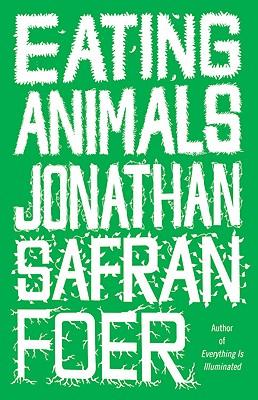
Eating Animals by Jonathan Safran Foer is a 2009 health book about factory farming, animal welfare, food ethics. Factory farming is the dominant system for producing meat in the United States, and its conditions — for animals, workers, and the environment — are deliberately kept out of public view.
Summary
Eating Animals began as a project to understand what food Foer would feed his newborn son. It became a three-year investigation into factory farming — how it works, what it costs, and whether any form of meat eating can be ethically defended. Foer is a novelist, not a journalist or scientist, and the book reads accordingly: it is personal, digressive, and more interested in moral and narrative complexity than in policy recommendations or dietary prescriptions.
The book's most disturbing material comes from Foer's attempts to gain access to industrial farms. Factory farming, he argues, is built on concealment: the industry has lobbied successfully for ag-gag laws and resists inspection, because what happens inside is difficult to reconcile with the values most Americans hold about animal welfare. He describes the conditions for chickens, pigs, and turkeys raised industrially — the densities, the genetic modifications for rapid growth, the pharmaceuticals, the byproducts that end up in feed — and makes the case that no individual farmer is the villain; the system itself produces these outcomes.
Foer also pursues alternatives, including small farms and a turkey farmer who raises heritage breeds outdoors. These alternatives exist but are marginal — they cannot supply the volume that Americans currently consume. The book is honest about this limitation: if everyone who read it stopped eating factory-farmed meat, the supply chain could not replace it with humane alternatives.
What distinguishes Eating Animals from other food advocacy books is its willingness to sit with ambivalence. Foer does not arrive at clean conclusions. He acknowledges that he loves food, that food is culture and family and memory, and that his grandmother's roast chicken is implicated in all of this. He ultimately chooses not to eat animals, but he presents the decision as genuinely difficult rather than obvious, and he does not argue that readers are obligated to follow. The strongest argument in the book is not "don't eat meat" but "don't not think about it."
Talk to Eating Animals like its author wrote you back.
Get the ideas that fit your life — not generic summaries.
- Chat with the book
- Audiobook-style main ideas
- Adapts to your life and goals
- Helps you take action
Key takeaways
- 1.
Factory farming is the dominant system for producing meat in the United States, and its conditions — for animals, workers, and the environment — are deliberately kept out of public view.
- 2.
The chicken, turkey, and pig bred for industrial production are genetically so different from their ancestors that many cannot walk, reproduce naturally, or survive outside their industrial environment.
- 3.
Antibiotic use in industrial livestock is a major driver of antibiotic-resistant bacteria, a public health risk that extends well beyond consumers of that meat.
- 4.
Small, humane farms exist and some of them are genuinely good, but they cannot supply the volume required if they replaced factory farms — the choice is not simply between industrial and artisanal.
- 5.
Food is not only nutrition; it is culture, memory, and relationship. Any honest reckoning with what we eat has to take that seriously, not just the facts about animal welfare.
- 6.
The environmental impact of factory farming — greenhouse gas emissions, water use, land use, manure lagoons — rivals that of the entire transportation sector.
- 7.
Workers in industrial slaughterhouses and processing plants face some of the highest rates of injury, illness, and psychological harm of any occupation.
- 8.
Choosing not to eat factory-farmed animals is one of the most consequential individual environmental and ethical decisions a person can make, but collective action and policy change are required to transform the system.
Discussion questions
Use these on your own, with a book club, or as chat starters in Superbook. Book club version, ready to copy or print →
- 1.
Foer frames the book around what he will feed his child. How does responsibility to the next generation change how you think about your own food choices?
- 2.
He argues that the industrial food system depends on concealment. If you were forced to watch how your food was produced, what would you change about what you eat?
- 3.
The book acknowledges that food is culture and memory. Is there an animal food that is so connected to family or heritage for you that you couldn't imagine giving it up? What does that tell you about the limits of ethical reasoning?
- 4.
Foer ends up not eating animals, but he doesn't tell readers they must do the same. Do you find that restraint admirable or a failure of conviction?
- 5.
He is honest that small, humane farms can't replace factory farms at current consumption levels. Does the impossibility of a systemic alternative change how much individual choices matter?
- 6.
The book covers the environmental case against factory farming alongside the animal welfare case. Which argument do you find more compelling, and why?
- 7.
Ag-gag laws make it illegal to photograph or record conditions inside many factory farms. Does that fact alone change how you think about what goes on inside them?
- 8.
If you eat factory-farmed meat, what would it take for you to stop? If you already don't, what led you to that decision?
- 9.
Foer interviews both industrial farmers and small sustainable farmers. How did your sympathy shift as you read between these perspectives?
- 10.
The book argues that fish are underrepresented in food ethics conversations, partly because their suffering is less legible to humans. Does that ring true to you?
- 11.
He notes that most people who claim to love animals eat them anyway. How do you reconcile that contradiction in your own life?
- 12.
If factory farming were abolished tomorrow and replaced with nothing, what would have to change about how Americans eat? Is that a plausible future?
Themes
Frequently asked questions
-
Is Eating Animals worth reading?
Yes, especially if you want a morally serious rather than scientifically focused account of factory farming. Foer is a novelist and writes beautifully about difficult material. The book won't give you dietary guidelines, but it will make the ethical stakes of food choices harder to ignore.
-
Does Eating Animals argue that everyone should be vegetarian?
Not exactly. Foer concludes that he personally will not eat animals, but he is careful not to prescribe the same for readers. His central argument is that factory farming is indefensible, but he acknowledges that the question of whether any animal eating is ethical is genuinely hard.
-
How does Eating Animals compare to The Omnivore's Dilemma?
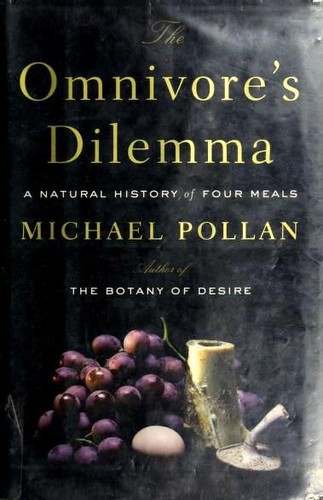
Both cover factory farming and its alternatives, but from different angles. Pollan is a journalist who reports on food systems; Foer is a novelist exploring a personal and moral question. Eating Animals is more focused on animal welfare and the ethics of the decision; The Omnivore's Dilemma is broader and more concerned with ecology and food culture.
-
Is Eating Animals scientifically accurate?
The factual claims about factory farming are well-sourced and generally accurate. Foer is not a scientist and doesn't pretend to be — he is making a moral argument supported by evidence, and the evidence he marshals is credible.
-
Who should read Eating Animals?
Anyone who eats meat and hasn't thought seriously about where it comes from. Also useful for people who already feel uncomfortable about factory farming but haven't been able to articulate why, or who want to understand the strongest arguments for and against meat eating.