Self-help · Book club
Effortless Mastery: Liberating the Master Musician Within book club questions
Here are 11 book club questions for Effortless Mastery: Liberating the Master Musician Within by Kenny Werner, ordered to open easily and end somewhere worth arguing about. Copy them, print them, or bring them up one at a time.
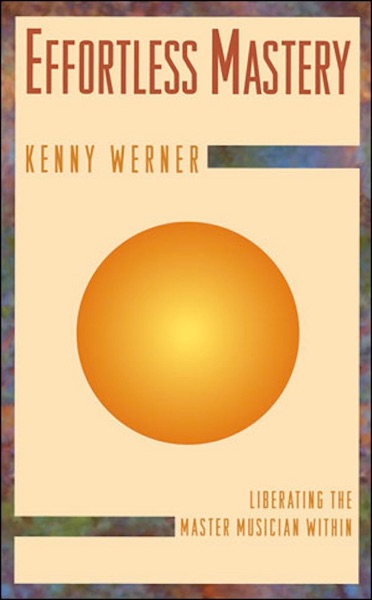
Effortless Mastery is jazz pianist Kenny Werner's account of what he calls "the space" — a state of relaxed, fearless attention that produces music of genuine quality, and that most musicians, including Werner himself for much of his early career, never reliably access.
Kenny Werner · 1996 · 3h 45m
Full summary and key takeaways →The 11 questions
- 1.
Werner argues that technical skill and fearless presence require separate cultivation. In your own practice — whether music or another field — have you experienced these as different things?
- 2.
Think of a performance or presentation where you were fully absorbed rather than self-monitoring. What conditions made that possible?
- 3.
Werner describes being technically advanced but emotionally defensive in his playing. Is there a gap like that in a skill you've developed?
- 4.
His cure involves a form of surrender — letting music flow through rather than managing it. Does that framing resonate, or does it seem mystical in a way that obscures the practical work?
- 5.
The exercises Werner prescribes involve deliberately slowing down and practicing single notes. What is the relationship between this kind of practice and conventional technical drilling?
- 6.
He draws on Buddhist ideas about non-attachment. Does framing a performance skill in those terms make the advice more or less accessible to you?
- 7.
Where in your work or creative life does fear of judgment most reliably degrade your performance?
- 8.
Werner's case applies most cleanly to jazz improvisation. Does it apply equally to a music student learning a classical piece, or to a different kind of performance?
- 9.
What would change in how you practiced or prepared if you genuinely believed that quality comes from getting out of the way of what you've already trained?
- 10.
The book has a strong devoted readership among professional musicians. Does that readership's experience constitute evidence for the approach, or is there a selection effect?
- 11.
Is there a difference between effortless mastery as Werner describes it and the concept of flow as described by Csikszentmihalyi?
How to run the discussion
- Pick six to eight, not all of them. An hour of real discussion covers fewer questions than anyone expects, and racing the list is what makes a book club feel like homework.
- Open with what people noticed, not what they concluded. Asking for a verdict first hardens opinions before anyone has heard each other.
- Let the disagreement run. The questions below that split a room are the ones worth the time; the ones everyone answers the same way can be skipped.
- Ask the quiet person a specific question. A direct, narrow question is far easier to answer than an open invitation to contribute.
Themes worth steering toward
If the conversation stalls, these are the threads that usually restart it.
Common questions
What are good book club questions for Effortless Mastery: Liberating the Master Musician Within?
Here are 11 book club questions for Effortless Mastery: Liberating the Master Musician Within by Kenny Werner, ordered to open easily and end somewhere worth arguing about. The strongest openers ask what each reader noticed rather than what they concluded, and the discussion usually turns on mastery and practice, fear and performance, creativity.
How long should a book club discussion of Effortless Mastery: Liberating the Master Musician Within last?
Most groups run 60 to 90 minutes of actual discussion. That is roughly six to eight questions, not all of them, so pick the ones that suit your group rather than working down the list in order.
What are the main themes in Effortless Mastery: Liberating the Master Musician Within?
Mastery and practice, Fear and performance, Creativity, Presence and flow, Musical identity. Those are the threads most likely to divide a room, which makes them the useful places to steer a discussion that has gone quiet.
Picking the next one? See books like Effortless Mastery: Liberating the Master Musician Within or questions for other book club picks.
