Fantasy · Book club
Elantris book club questions
Here are 11 book club questions for Elantris by Brandon Sanderson, ordered to open easily and end somewhere worth arguing about. Copy them, print them, or bring them up one at a time.
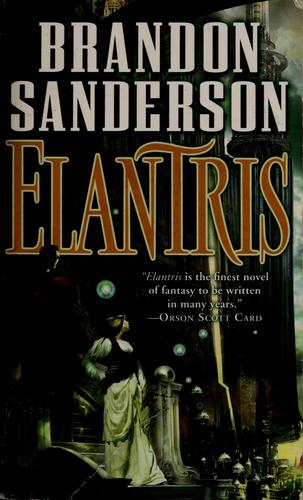
Elantris was once a city of gods — a place where ordinary people were spontaneously transformed into magical beings of light and power, capable of healing and creation.
Brandon Sanderson · 2005 · 9h 45m
Full summary and key takeaways →The 11 questions
- 1.
Hrathen believes he is saving Arelon from a worse fate by converting it. Does the novel vindicate or condemn his logic, and where does it draw the line?
- 2.
Raoden builds a civil society among people whose every moment is suffering. Is his optimism heroic or delusional, and does the story earn its answer?
- 3.
Sarene is maneuvering politically in a court that doesn't take her seriously. Do you find her methods admirable, uncomfortable, or both?
- 4.
The AonDor magic system is broken in a specific, discoverable way. Did you figure out the solution before Raoden did? Does it matter for the reading experience?
- 5.
The three storylines are almost entirely separate until the final act. Does that structure build tension or frustrate the momentum?
- 6.
Elantris reads the stigmatized city as a leper colony — a place society discards its embarrassing problems. Does that allegory hold up, and what does the novel do with it?
- 7.
Compared to later Sanderson (Mistborn, Stormlight Archive), Elantris feels smaller in scope. Is that a limitation or a feature for a debut?
- 8.
The romance between Raoden and Sarene develops with almost no direct contact. Is that constraint handled cleverly or does it feel like an artificial barrier?
- 9.
Dilaf, Hrathen's subordinate, is a purer villain than Hrathen. Does his presence clarify or muddy the moral picture?
- 10.
Sanderson is often criticized for writing emotion at a functional rather than deep level. Did you find the emotional beats of Elantris convincing?
- 11.
The novel's ending is unusually complete for a fantasy. Is that satisfaction earned, or does it feel too tidy?
How to run the discussion
- Pick six to eight, not all of them. An hour of real discussion covers fewer questions than anyone expects, and racing the list is what makes a book club feel like homework.
- Open with what people noticed, not what they concluded. Asking for a verdict first hardens opinions before anyone has heard each other.
- Let the disagreement run. The questions below that split a room are the ones worth the time; the ones everyone answers the same way can be skipped.
- Ask the quiet person a specific question. A direct, narrow question is far easier to answer than an open invitation to contribute.
Themes worth steering toward
If the conversation stalls, these are the threads that usually restart it.
Common questions
What are good book club questions for Elantris?
Here are 11 book club questions for Elantris by Brandon Sanderson, ordered to open easily and end somewhere worth arguing about. The strongest openers ask what each reader noticed rather than what they concluded, and the discussion usually turns on decay and renewal, faith and doubt, political power.
How long should a book club discussion of Elantris last?
Most groups run 60 to 90 minutes of actual discussion. That is roughly six to eight questions, not all of them, so pick the ones that suit your group rather than working down the list in order.
What are the main themes in Elantris?
Decay and renewal, Faith and doubt, Political power, Disability and identity, Social stigma. Those are the threads most likely to divide a room, which makes them the useful places to steer a discussion that has gone quiet.
Picking the next one? See books like Elantris or questions for other book club picks.
